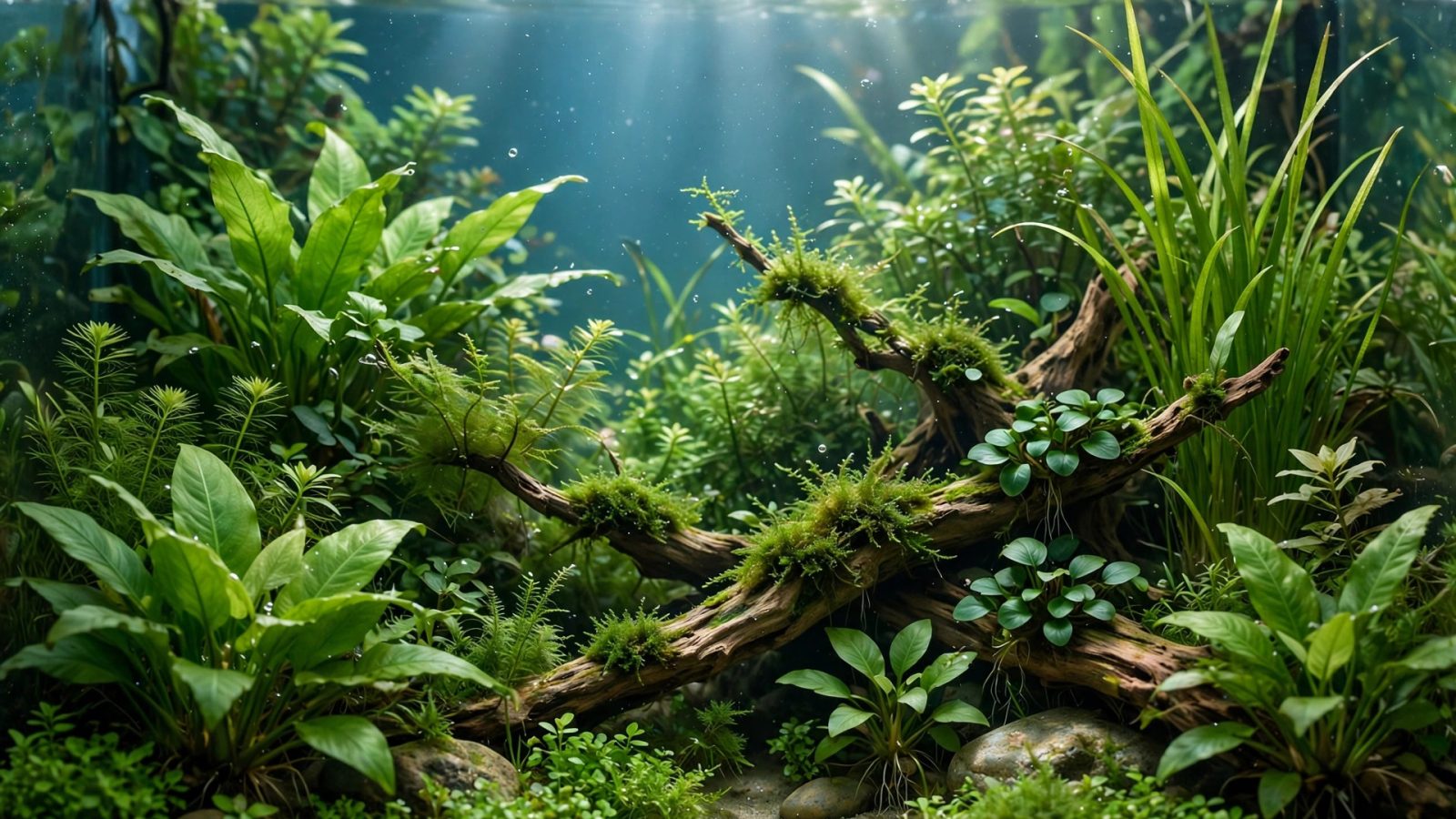
An aquarium plant fertilizer schedule is simply a routine: which fertilizers you dose, how much, and on which days. Beginners often dose randomly — a squirt here when leaves look pale, nothing for weeks, then a heavy dose that triggers algae. Plants don’t work that way. They need a steady, predictable supply of nutrients, and the easiest way to give it to them is a weekly schedule you can follow without thinking.
This guide gives you a beginner-friendly fertilizer schedule built around the most common setup: a low-to-medium light tank with an all-in-one liquid fertilizer, plus root tabs for heavy root feeders. We’ll cover exactly what to dose each day of the week, how to adjust for your tank, and the mistakes that cause most fertilizer-related algae.
Why a Schedule Matters More Than a Brand
New hobbyists obsess over which fertilizer bottle to buy, but the brand matters far less than consistency. Plants absorb nutrients continuously; when supply swings between feast and famine, growth stalls and algae — which adapts to unstable conditions faster than any plant — moves in. A modest fertilizer dosed on a reliable schedule almost always beats a premium product dosed whenever you remember.
The schedule below is designed around two principles. First, separate your dosing days from your water-change day so you’re not pouring fertilizer into water you’re about to remove. Second, dose smaller amounts more often rather than one big weekly dump — stability is the goal. If you take one thing from this article, let it be this: pick a routine and stick with it for at least four weeks before judging results. Plants respond slowly, and changing your schedule every week tells you nothing.
What Your Plants Actually Need
Before the schedule, a quick orientation on what you’re dosing. Aquarium plants need the same nutrients as garden plants, split into two groups:
- Macronutrients — nitrogen (N), phosphorus (P), and potassium (K), needed in the largest amounts. In a stocked tank, fish waste supplies some nitrogen and phosphorus, but rarely enough for demanding plants, and almost never enough potassium.
- Micronutrients — iron (Fe), magnesium, manganese, zinc, boron, and others, needed in tiny amounts. Iron gets the most attention because its deficiency shows clearly as pale new growth.
- Carbon — technically the most important nutrient, but it’s not in fertilizer bottles. It comes from CO2 (injected or atmospheric) and from the carbonate in your water. If you’re running low-tech, your fertilizer schedule assumes the low-tech approach to growing plants without CO2 — modest light, and expectations matched to it.
An all-in-one liquid fertilizer contains macros and micros in one bottle, which is why it’s the beginner recommendation throughout this guide. Separate macro/micro dosing (the EI method) gives more control and costs less per dose, but it adds complexity you don’t need yet — see our dry vs liquid fertilizer comparison when you’re ready to level up.
The Beginner Weekly Fertilizer Schedule
This schedule assumes a 20-gallon tank with moderate planting, an all-in-one liquid fertilizer, and root tabs for heavy root feeders. Adjust the dose volume to your tank size using the bottle’s per-gallon instructions — the pattern of days stays the same.
Monday — Liquid fertilizer dose
Dose your all-in-one liquid fertilizer at the bottle’s recommended amount for your tank volume. Pour it near the filter outflow so it disperses through the tank. This is the start of the nutrient week.
Tuesday — Rest
No dosing. Plants are drawing down what you added Monday. This rest day is deliberate — it prevents the accumulation mindset that leads to overdosing.
Wednesday — Liquid fertilizer dose (half strength)
Dose half the Monday amount. Two smaller doses per week keep nutrient levels steadier than one large one, which is the single biggest improvement most beginners can make to their routine.
Thursday — Rest
No dosing. Observe your plants today — look at new growth, not old leaves. New leaves tell you whether your current schedule is working; old damaged leaves rarely recover.
Friday — Liquid fertilizer dose (half strength)
Same as Wednesday: half the Monday dose. By now you’ve dosed the equivalent of two full weekly doses, split across three days for stability.
Saturday — Rest
No dosing. If you run CO2, check your drop checker and bubble rate today as part of weekly maintenance — consistent CO2 matters as much as consistent fertilizer. Our CO2 drop checker guide covers reading yours correctly.
Sunday — Water change day (no fertilizer)
Do your weekly 25–40% water change. Do not dose fertilizer today — you’d be pouring nutrients into water you’re removing, and the fresh water resets nutrient levels anyway. The week restarts Monday.
Root Tabs: The Monthly Part of the Schedule
Liquid fertilizer feeds plants through the water column, which suits epiphytes like Java Fern and floating plants perfectly. But heavy root feeders — Amazon swords, cryptocorynes, vallisneria, dwarf sagittaria — feed mainly through their roots and need root tabs pushed into the substrate near them.
Add root tabs on the first Sunday of each month, after your water change. Push one tab deep into the substrate (2–3 inches down) within a few inches of each heavy root feeder, spacing tabs 4–6 inches apart in densely planted areas. They dissolve over 1–3 months depending on brand, so monthly replacement keeps supply steady. If you’re unsure whether a plant needs them, our liquid fertilizer vs root tabs guide breaks it down by plant type.
Adjusting the Schedule for Your Tank
The schedule above is a starting point, not gospel. Adjust based on what your plants tell you:
- Heavily planted tank with fast growers (stem plants, water wisteria): increase to three half-doses per week or raise each dose slightly. Fast-growing plants are nutrient hogs — see our fast-growing plants for new tanks for which species drink the most.
- Lightly planted tank or slow growers only (anubias, java fern, bucephalandra): drop to one half-dose twice a week. Slow growers need surprisingly little, and excess just feeds algae on their leaves.
- High light + CO2 injection: you’ll likely need full EI-style dosing — daily macros and micros. The beginner schedule above will underfeed a high-tech tank. Our high-tech setup guide covers the upgrade path.
- New tank (first month): start at half the recommended doses. New setups have unstable biology, and full dosing in week one is a classic algae trigger. Ramp up as plants establish.
- Algae appearing: don’t immediately stop fertilizing — starving plants makes algae worse. Instead, check the usual culprits: too much light, inconsistent CO2, or overfeeding fish. Reduce light intensity or photoperiod first; adjust fertilizer second.
Signs Your Schedule Is Working (or Isn’t)
Give any schedule four full weeks before judging it. Here’s what to look for:
Signs it’s working
- New leaves emerge green and full-sized (compare new growth to old, not old leaves to each other)
- Stem plants grow steadily and need trimming every few weeks
- Red plants hold their color (with adequate light)
- Algae stays at background levels — a little on glass between cleanings is normal
Signs something’s off
- Pale or yellow new leaves: likely iron or nitrogen shortage — increase micros or overall dose slightly
- Pinholes in older leaves: classic potassium deficiency — check your fertilizer contains K, or add a potassium supplement
- Stunted, twisted new growth: possible calcium/magnesium issue — check your GH; very soft water sometimes needs remineralization
- Algae bloom after increasing doses: you increased too fast, or light/CO2 is the real limiting factor — see our nutrient deficiency guide for a full symptom chart
Common Fertilizer Schedule Mistakes
Dosing right after a water change
Fertilizer added to old water gets partially removed minutes later. Always dose on non-water-change days.
Chasing numbers instead of watching plants
Test kits for nitrate and phosphate are useful, but plants are the best indicator. If growth is lush and algae is minimal, your schedule works regardless of what the test says.
Changing everything at once
When problems appear, change one variable at a time — light, then CO2, then fertilizer — and wait two weeks between changes. Changing all three simultaneously teaches you nothing about what actually helped.
Dosing “a little extra, just in case”
More fertilizer doesn’t make plants grow faster — light and CO2 set the speed limit. Excess fertilizer beyond what plants can use just accumulates and feeds algae. Dose what the schedule says, not what feels generous.
Forgetting root tabs entirely
The most common gap in beginner routines. If your swords and crypts look starved while your stem plants thrive, the liquid fertilizer is fine — the root feeders are just hungry. Tabs fix it within weeks.
Sample Schedule at a Glance
For the fridge door:
- Mon: Liquid ferts (full dose)
- Tue: —
- Wed: Liquid ferts (half dose)
- Thu: —
- Fri: Liquid ferts (half dose)
- Sat: —
- Sun: Water change (no ferts) · root tabs on the 1st Sunday of the month
The EI Dosing Schedule (High-Tech Tanks)
Estimative Index (EI) dosing takes the opposite approach from lean dosing: instead of carefully matching nutrients to uptake, you deliberately overdose everything so nutrients are never the limiting factor, then reset with a 50% weekly water change. It sounds reckless; it’s actually the most algae-resistant high-tech method because plants never experience the deficiency fluctuations that trigger algae.
The weekly EI rhythm
- Monday: Macros (nitrogen, phosphorus, potassium) — full EI dose
- Tuesday: Micros (iron, trace elements) — full EI dose
- Wednesday: Macros
- Thursday: Micros
- Friday: Macros
- Saturday: Micros
- Sunday: 50% water change, no dosing
The cardinal rule: never dose macros and micros on the same day — iron and phosphate react in concentrated form and precipitate out, making both unavailable. Alternating days keeps them apart.
EI demands the weekly 50% change — without the reset, nutrients accumulate to genuinely problematic levels. If you can’t commit to that water change, don’t run EI; run a leaner schedule instead. See our dry vs liquid fertilizer comparison for the cheapest way to mix EI solutions.
The PPS-Pro Schedule (Precision Low-Dose)
PPS-Pro (Perpetual Preservation System) is EI’s disciplined sibling: daily micro-doses calibrated to actual plant uptake, with no weekly reset required. You dose small amounts of macros and micros every day before lights-on.
- Daily: 1ml per 10 gallons of macro solution + 1ml per 10 gallons of micro solution (dosed separately, minutes apart)
- Water changes: normal schedule — no mandatory 50% reset
- Best for: tanks where huge weekly water changes are impractical, and hobbyists who prefer daily routine to weekly drama
PPS-Pro requires more upfront calibration (you adjust doses based on plant response over weeks), but once dialed in it’s the most stable long-term method. It’s particularly good for shrimp tanks, where the massive EI water changes can stress sensitive species.
Seasonal and Situational Adjustments
A schedule isn’t a suicide pact — adjust for reality:
- After a major trim: halve doses for a week. You just removed a large fraction of your nutrient consumers; full dosing into a freshly trimmed tank feeds algae, not plants. Ramp back up as growth resumes.
- New tank (first month): quarter to half doses. New plants with damaged root systems can’t use full nutrition, and excess feeds the new-tank algae bloom. Increase gradually per plant response.
- Vacation: do a water change, dose normally, and leave. A week without dosing is harmless — plants draw on stored nutrients. An automatic doser is nice but unnecessary for anything under two weeks.
- Algae outbreak: don’t stop fertilizing (starving plants helps algae, not you). Instead, fix the actual cause — usually light/CO2 imbalance — while keeping the schedule steady. See our deficiency guide before changing anything.
- Seasonal light changes: tanks near windows get more light in summer — that’s a signal to slightly increase dosing, not a problem to fix with blackout curtains alone.
Frequently Asked Questions
Can I dose everything once a week instead of spreading it out?
You can, but plants prefer steady availability to feast-and-famine cycles. Single weekly mega-doses also spike nutrient levels right after dosing — exactly when algae are watching for an opening. Split dosing (2–3x weekly minimum) gives better results with the same total amount.
Do I dose on water-change day?
No — dose the day after. Fresh change water has reset nutrient levels; dosing into it immediately partially wastes the reset. One rest day between change and dose is the standard rhythm across all methods.
How do I know if I’m overdosing?
The plants tell you: persistent thread/hair algae despite correct light and CO2, or green dust algae that returns within days of cleaning, often signals excess nutrients relative to plant uptake. Cut doses by a third, wait two weeks, and reassess. Underdosing shows as deficiencies (see our deficiency guide); overdosing shows as algae.
Whether you run the beginner weekly rhythm, full EI, or daily PPS-Pro, the principle is identical: feed consistently, observe the plants, and adjust gradually. It takes about thirty seconds on dose days, costs a few dollars a month, and removes the guesswork that stalls so many planted tanks. Pair your schedule with a sensible light schedule and regular water changes, and your plants get the one thing they want most from you: consistency.