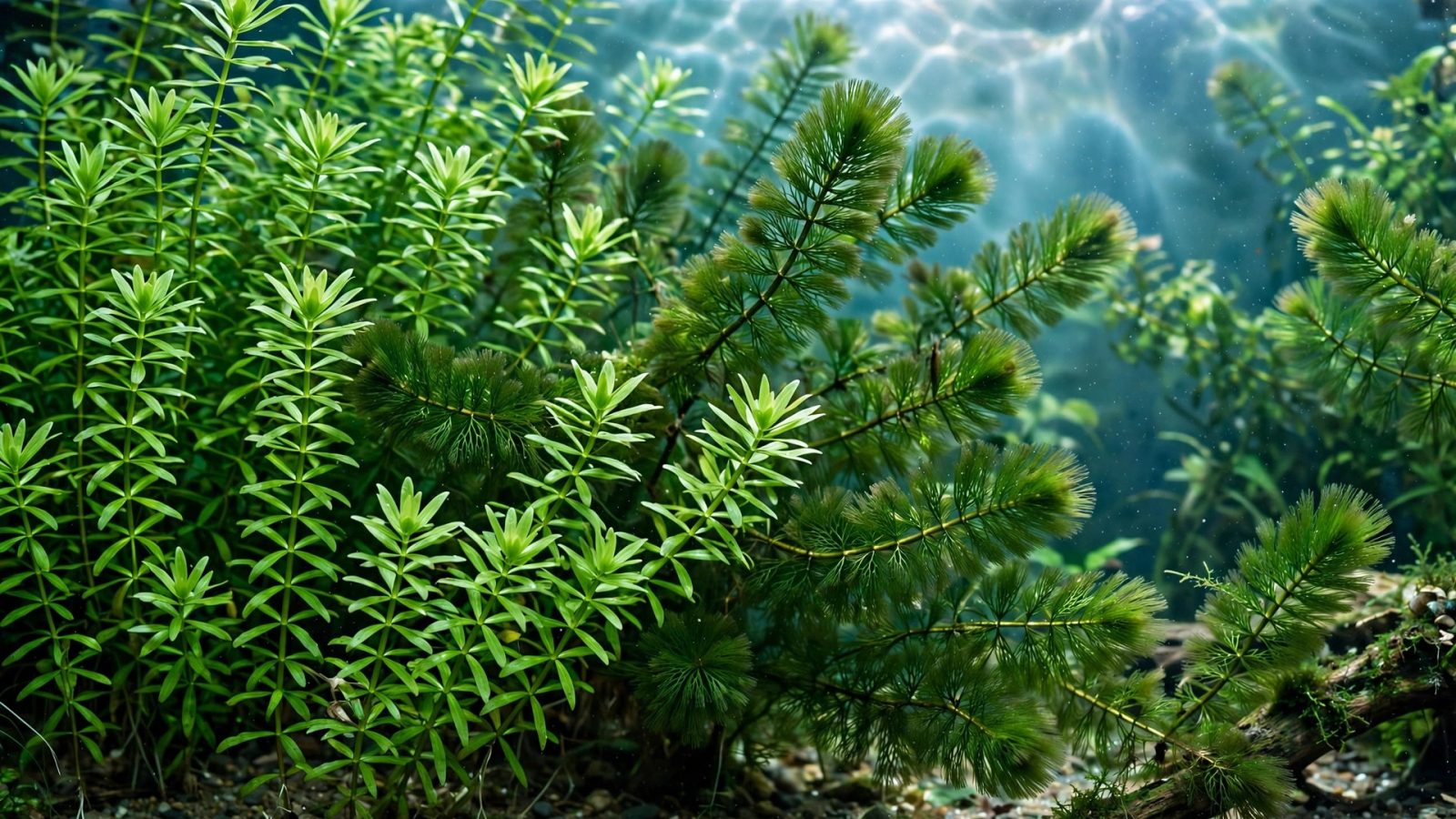
Heaters fail, electricity costs add up, and some of the most charming fish in the hobby — white cloud mountain minnows, zebra danios, paradise fish — prefer it cool. An unheated tank isn’t a compromise; it’s a distinct, lower-maintenance way to keep aquariums. But tropical plant lists don’t apply when your water sits at 65°F. These cold-water aquarium plants that need no heater are proven at 60–70°F (15–21°C), growing steadily where heat-loving species would stall and melt.
“Cold water” in aquarium terms means room temperature without a heater — typically 60–72°F depending on your climate and season. That’s not a goldfish pond in winter; it’s the temperature of a tank sitting in a 68°F living room. Most of the plants below tolerate brief dips into the 50s, but sustained growth happens in the 60s. If your winters drop the room below 60°F, even these plants slow down — plan for seasonal growth rhythms rather than year-round vigor.
Why Cold-Water Planted Tanks Work So Well
Cooler water holds more dissolved oxygen, slows fish metabolism (less waste), and suppresses many algae species that thrive in warmth. The result is a tank that’s chemically more stable and biologically calmer than its heated equivalent. Plant growth is slower — expect roughly 60–70% of tropical growth rates — but it’s steady and healthy. The tradeoff is species selection: you need plants that evolved for temperate waters, not tropical ones merely tolerating the cool.
The 11 Best Cold-Water Aquarium Plants
1. Hornwort (Ceratophyllum demersum)
Hornwort is the definitive cold-water plant — it grows in temperate ponds and lakes worldwide, surviving under ice in the wild. In a 60–65°F tank it grows vigorously, absorbing nutrients and outcompeting algae exactly as it does in tropical setups. Float it or anchor it; either way it’s a nutrient sponge and oxygen factory. It’s also the backbone of our fast-growing new-tank list and a survivor in goldfish tanks — the cold-water trifecta.
2. Anacharis (Egeria densa)
Anacharis is native to temperate South American waters and genuinely prefers the cool — it grows fastest at 60–70°F and actually struggles in hot tanks above 80°F. This makes it the rare plant that’s better unheated. Bunch stems together and watch them reach the surface within weeks. As noted before: it’s invasive in many regions, so never release it outdoors and check local regulations. Brazilian pennywort is the substitute where anacharis is restricted.
3. Java Fern (Microsorum pterotoides)
Java fern tolerates 60°F without complaint — it’s one of the most temperature-flexible plants in the hobby. Growth slows in the cool, but the plant stays healthy and continues producing new leaves and plantlets. Attach to wood or rock with the rhizome exposed, following standard Java fern care. In a cold-water tank, Java fern’s slow growth is a feature: it needs almost no maintenance across seasons.
4. Anubias (all varieties)
Like Java fern, anubias handles cool water gracefully — nana, barteri, coffeefolia all grow at 60–70°F, just slowly. Their near-indestructibility makes them ideal for unheated tanks where you want permanence without fuss. They’ll grow perhaps half as fast as in tropical tanks, which means a well-planted cold-water anubias scape stays composed for months between trimmings. If leaves yellow in the cool, our anubias guide still applies — temperature is rarely the cause.
5. Vallisneria (Italian Val / Jungle Val)
Vallisneria is a temperate-tolerant genus that powers through cool water, sending up its characteristic ribbons at 60°F and above. Italian val (Vallisneria spiralis) is particularly cold-hardy. It spreads by runners into a background curtain, feeds through root tabs, and provides the vertical structure cold-water tanks need. In unheated tanks it grows steadily rather than explosively — easier to manage than its tropical reputation suggests.
6. Water Sprite (Ceratopteris thalictroides)
Water sprite grows well down to 60°F, in both planted and floating forms. The floating form is especially valuable in cold-water tanks: it grows fastest (atmospheric CO2), provides shade that further cools the water in summer, and its dangling roots shelter white cloud fry. It’s less fussy about temperature than about light — give it moderate light and it thrives. Thin regularly; it propagates freely from leaf plantlets.
7. Guppy Grass (Najas guadalupensis)
Guppy grass tolerates the full range from cool to tropical, growing densely at 65°F. Its fine, bushy masses are perfect cold-water fry cover — white cloud and danio fry vanish into it. It needs no planting (though it can be anchored), asks nothing beyond light, and propagates from fragments. In cool water it grows at a manageable pace rather than the explosive tropical rate, making it less of a maintenance burden.
8. Dwarf Sagittaria (Sagittaria subulata)
Dwarf sag is natively temperate — it grows in North American waters that freeze in winter — so a 65°F tank is well within its comfort zone. It spreads by runners into grass-like tufts, tolerates low light, and handles the seasonal temperature swings of an unheated room without melting. In cool water it stays shorter and denser, making a better carpet than its tropical growth. Root tabs in the substrate keep it spreading.
9. Brazilian Pennywort (Hydrocotyle leucocephala)
Pennywort grows happily at 60–70°F, producing its distinctive round leaves on trailing stems. The floating form is the hardiest — it continues growing through cool spells that slow planted stems. It’s an excellent anacharis alternative where that plant is restricted, with similar vigor and a more attractive form. Pinch back to encourage branching; long single stems get leggy in lower light.
10. Cryptocoryne wendtii
Most crypts prefer warmth, but C. wendtii is the notable exception — it tolerates 60°F and keeps its broad, ruffled rosettes intact. It’s the best rooted rosette plant for cold-water midgrounds, bringing the fullness that cool tanks otherwise lack. Standard crypt rules: root tabs, don’t move it, wait out any initial melt. Once established it’s as permanent as anubias. The bronze and brown varieties add warm color to the cool-water palette.
11. Marimo Moss Balls
Marimo balls are native to cold lakes in Japan and Iceland — they’re literally a cold-water organism. At 60–70°F they grow (slowly) and stay healthy indefinitely; warm tropical tanks above 78°F actually stress them. In a cold-water setup they’re in their element: drop them on the substrate, roll occasionally, rinse in old tank water. They’re the perfect low-effort accent for an unheated tank.
Setting Up an Unheated Planted Tank
Location matters more without a heater. Keep the tank in a room with stable temperature — avoid exterior walls, drafty windows, and spots above heating vents that create daily swings. A thermometer (not a heater) is essential equipment: a simple stick-on LCD thermometer lets you track the seasonal range. Most temperate plants handle 60–72°F; problems start with rapid swings (>5°F in a day), not with cool absolute temperatures.
Lighting stays standard: 6–8 hours daily of moderate light. Cool water doesn’t change light needs, though slower plant growth means you can run slightly leaner fertilizing — dose at half the tropical rate and watch new growth. Stocking is where cold-water tanks shine: white cloud mountain minnows, zebra and pearl danios, paradise fish, hillstream loaches, and (in larger tanks) goldfish all thrive unheated. These fish evolved for the same temperate waters as the plants — the biotope practically builds itself.
Summer is the real challenge. An unheated tank in a 85°F heatwave becomes a hot tank — more dangerous than winter cool. Mitigate with floating plants (shade), a small fan blowing across the surface (evaporative cooling drops 2–4°F), and reduced photoperiod. The plants on this list tolerate brief heat better than tropical fish do, but sustained 80°F+ stresses the true cold-water species.
Seasonal Rhythm: Embracing Slower Winters
Don’t fight the seasons — use them. In winter, when room temperatures dip and growth slows, reduce fertilizing and photoperiod slightly; the tank enters a gentle dormancy. In spring, as rooms warm, increase both and watch the growth surge. This rhythm is natural and healthy — temperate plants evolved for it. Resist the urge to “fix” slow winter growth with more fertilizer; the plants can’t use it, and algae can. The low-tech seasonal approach formalizes this cycle.
Frequently Asked Questions
What temperature is too cold for these plants?
Sustained water below 55°F stresses even the hardiest (hornwort and anacharis survive it, but stop growing). If your room drops that low, a small heater set to 60°F as a safety floor is wise — you’re still running an essentially unheated tank.
Can I keep tropical fish in an unheated tank?
No — this is the hard line. Bettas, tetras, guppies, and other tropicals need 75°F+. Unheated tanks are for temperate species only: white clouds, danios, paradise fish, goldfish. Match livestock to the temperature, always.
Do cold-water tanks need less light?
Light needs don’t change with temperature — but because growth is slower, the consequences of excess light (algae) arrive faster than plants can use it. Run a moderate 6–8 hour photoperiod and let plant growth set the pace.
Will my plants survive a winter power outage?
Better than tropical tanks will. Cool-water plants tolerate temperature drops gracefully; it’s the fish and filter bacteria that suffer first. Every plant on this list survives days at 50–55°F without damage — one more resilience advantage of the unheated approach.
Three Unheated Tank Builds to Try
1. The White Cloud Stream (20-gallon long). The classic: fine gravel, smooth river rocks, a branch of driftwood with Java fern and anubias nana attached, vallisneria along the back, hornwort floating. Stock with 12 white cloud mountain minnows and 6 hillstream loaches. No heater, sponge filter, 7 hours of light. This tank practically runs itself — the minnows’ low bioload and the plants’ nutrient uptake stay balanced with biweekly 25% water changes.
2. The Temperate Jungle (29-gallon). For the planted-tank enthusiast gone cold: aquasoil substrate, dwarf sag carpet (it stays short in the cool), crypt wendtii midground, jungle val background, water sprite floating, marimo accents. Stock with pearl danios and a paradise fish as centerpiece. Dose liquid fertilizer at half strength. The result is a lush aquascape indistinguishable from a tropical one — just cooler, calmer, and cheaper to run.
3. The Goldfish Garden (55-gallon). Two fancy goldfish, heavy hardscape with anubias barteri and Java fern tied to driftwood, crinum in the back corners, hornwort floating for nutrient export. Oversized canister filter, weekly 40% water changes. The plants handle the waste stream; the goldfish provide constant CO2 and fertilizer. It’s the lowest-tech “big tank” in the hobby — no heater, no CO2, just mass and maintenance. Our goldfish plant guide details the planting strategy.
All three builds share the unheated philosophy: let the room set the temperature, choose organisms that evolved for it, and enjoy the lower bills and calmer biology. A heater is a tool, not a requirement — and for temperate species, its absence is a feature.