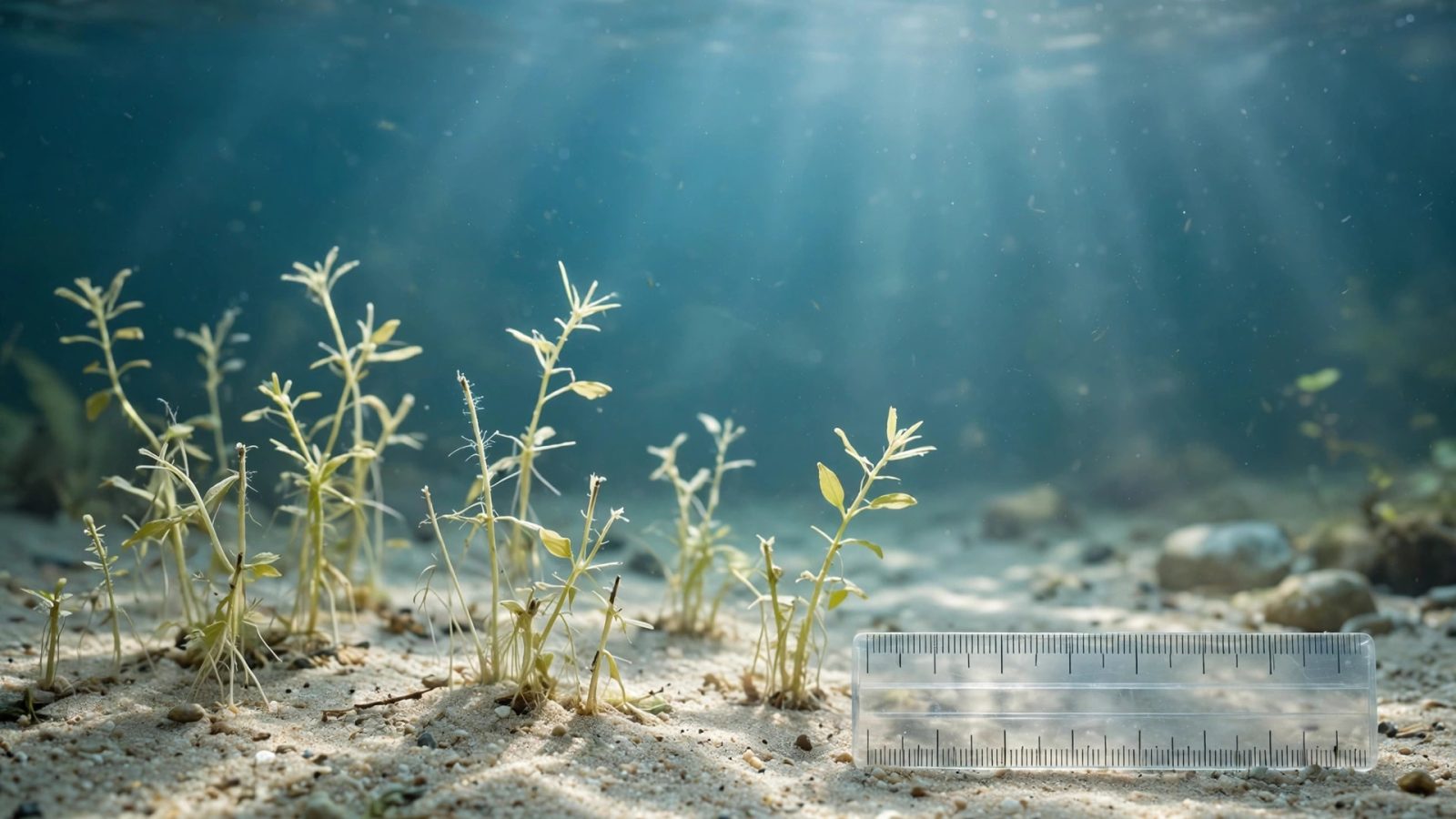
Healthy-looking plants that simply refuse to grow are one of the most frustrating problems in the hobby — no dramatic symptoms, just… nothing happening. When hobbyists ask why their aquarium plants are not growing, the answer is almost always a limiting factor: plants need light, carbon, and nutrients together, and growth stops at whichever one runs out first. This guide gives you a systematic 10-reason diagnostic to find your limiting factor instead of guessing.
The Limiting-Factor Framework
Plant growth follows the law of the minimum: growth is capped by the scarcest essential resource, no matter how abundant everything else is. Blasting more light on a tank with no available carbon does not help — it grows algae. Dumping fertilizer into a tank with inadequate light does not help either. The skill is finding which factor is limiting and fixing that one specifically. Work through the ten reasons below in order — they are ranked roughly by how commonly they are the culprit.
1. Not Enough Light
The most common limiting factor, especially under stock kit LEDs or aging bulbs. Signs: plants alive but static for months, leggy stretched stems reaching upward, small pale new leaves, lower leaves dropping.
Check: is your light actually a plant-capable light? Many kit LEDs are built for viewing fish, not growing plants. How old are the bulbs/tubes? Fluorescents lose growing power long before they burn out. Is floating-plant cover or algae film blocking light from reaching below?
Fix: upgrade to a proper planted-tank light, replace aging tubes, clear surface cover partially, and clean any film from the light’s splash guard. Increase photoperiod to 7–8 hours if you are running very short days.
2. Carbon Limitation (No/Low CO2)
In low-tech tanks, dissolved CO2 from the air and livestock caps growth speed — that is normal and fine, but it means growth will be slow by design. The problem case is a high-light tank without CO2: light demands growth the carbon supply cannot support, and plants stall while algae thrives.
Check: strong light + no CO2 + stalled plants + algae = carbon limitation.
Fix: either add CO2 (injected or liquid carbon) or reduce light to match your carbon reality. Matching light to CO2 is the single most important balance decision in the hobby. Our guide to growing plants without CO2 shows what healthy low-tech growth actually looks like — slower, but steady.
3. Macronutrient Shortage (N, P, K)
Plants that start growing then stall, with older leaves deteriorating, are often out of macros — especially potassium and nitrogen in lightly stocked tanks.
Check: any yellowing, pinholes, or edge browning on old leaves? Nitrates reading zero?
Fix: start (or increase) a complete fertilizer. Diagnose the specific shortage with our nutrient deficiency chart rather than guessing.
4. Micronutrient Shortage (Iron and Friends)
Pale new growth with green veins, deformed tips, or washed-out red plants point to micros — most commonly iron availability.
Check: symptoms on new leaves while old leaves look fine.
Fix: a complete micro mix or iron supplement appropriate to your pH. If you dose micros and nothing changes, suspect pH-related iron lockout rather than underdosing.
5. The Plant Is Still Transitioning
New plants often sit apparently lifeless for weeks while they shed emersed leaves and build submerged root systems. Nothing is wrong — the action is underground.
Check: planted within the last 4–8 weeks? Growing point firm? Tiny new leaves or white root tips visible?
Fix: patience. Do not move it, do not “help” it, do not change conditions. See why aquarium plants melt for transition timelines by species.
6. Wrong Plant for Your Setup
A high-light, CO2-hungry stem plant in a low-tech tank will not grow no matter what you do — it will survive, barely, and slowly decline. This is not a deficiency; it is a mismatch.
Check: research each non-growing species’ actual needs. Be honest about whether your tank provides them.
Fix: either upgrade the setup to meet the plant, or — usually wiser — swap in species suited to your conditions. Our low-light plant list is built for exactly this situation.
7. Root-Zone Problems
Heavy root feeders (swords, crypts, vallisneria) in exhausted inert substrate stall even with perfect water-column dosing. Compacted or anaerobic substrate suffocates roots.
Check: root feeders stalling while water-column feeders grow? Substrate more than a year old with no root tabs? Substrate smells like rotten eggs when disturbed?
Fix: root tabs near heavy root feeders; gently aerate compacted substrate during water changes. If roots are rotting, follow our root rot rescue protocol.
8. Algae Competition and Smothering
Plants coated in algae cannot photosynthesize properly and stall. The stalled plant then weakens further — a vicious cycle.
Check: visible algae film on the non-growing plants’ leaves.
Fix: treat the algae type specifically (start with our BBA guide for the worst one), trim smothered leaves, and correct the underlying imbalance so it does not return.
9. Temperature Out of Range
Most tropical aquarium plants grow best between 22–28°C (72–82°F). Cold tanks (unheated rooms in winter, cold-water setups with tropical species) slow metabolism to a crawl; overheated tanks (above 30°C / 86°F) stress most species.
Check: thermometer reading, heater function, seasonal room changes.
Fix: a reliable heater and thermometer are non-negotiable for tropical plants. Match species to your actual temperature — cold-water species exist for unheated tanks.
10. Chemical Inhibition
Some medications, algaecides, and water-conditioner overdoses inhibit plant growth. Activated carbon exhausted months ago, or conversely fresh carbon stripping trace elements aggressively, can also play a role at the margins.
Check: did the stall coincide with any treatment or product addition?
Fix: water changes and fresh carbon to remove the chemical; then leave the tank alone to recover. When medicating fish in a planted tank, expect a growth pause as the price.
The Diagnostic Walkthrough: Putting It Together
When you find stalled plants, run this sequence:
- How long? Under 2 months since planting → probably transition (reason 5). Longer → continue.
- Which plants? All species stalled → systemic (light, carbon, macros). One species stalled → mismatch or species-specific issue (reasons 6, 7).
- What do the leaves say? Symptoms present → nutrient diagnosis via the deficiency chart. No symptoms, just no growth → light/carbon/temperature.
- What changed? Always ask. New light, new fertilizer routine, CO2 ran out, seasonal temperature shift — the timeline usually names the culprit.
- Fix one thing. Change the single most likely factor, wait three weeks watching new growth, then reassess. The hobby punishes impatience more than any deficiency.
Setting Honest Expectations
Growth speed varies enormously by setup. A low-tech tank growing anubias may add one leaf a month — that is healthy, not stalled. A high-tech tank’s stem plants should show visible daily extension. Judge your plants against what your setup can actually deliver, not against someone’s CO2-injected show tank on social media. Steady, algae-free, slow growth beats fast growth that collapses into an algae farm.
Frequently Asked Questions
How long should I wait before concluding plants aren’t growing?
Give any change or new planting a full month (two for slow species like anubias and crypts) before diagnosing a stall. Plants operate on weeks, not days.
Will more fertilizer make plants grow faster?
Only if nutrients are the limiting factor. If light or carbon is limiting, extra fertilizer just feeds algae. Find the limit first, then feed it.
My plants grew well for months then stopped — what happened?
The most common story: the substrate’s initial nutrients ran out (around 6–12 months for aquasoils, sooner for inert substrates without tabs), or the light aged, or the bioload changed. Walk the ten reasons with “what changed at month X?” in mind.
Can too much light stall growth?
Indirectly, yes. Excess light beyond what the carbon and nutrient supply can support does not speed growth — it stresses plants and hands the advantage to algae, which then smothers leaves and stalls the plants further. If your light is strong and plants are stalled with algae present, dimming is often more productive than any fertilizer change. Growth needs balance, not maximums.
Do root tabs run out?
Yes — typically over 2–4 months depending on brand and plant demand. Heavy root feeders in inert substrate need fresh tabs on a schedule, not a one-time dose. If swords or crypts stall on a predictable cycle a few months after tabbing, the tabs are spent. Push new ones in near (not through) the root crown and note the date.
Case Studies: Stalls Diagnosed
Case 1: The 4-year-old light
Setup: 29-gallon, T5 fixture bought with the tank four years ago, no CO2, complete fertilizer dosed weekly.
Symptoms: Everything alive but static for a year; stem plants leggy, lower leaves dropping.
Diagnosis: Tubes aged past useful PAR output (reason 1). The fertilizer was fine; the light was exhausted.
Fix: LED upgrade. Visible new growth within two weeks, no other changes.
Lesson: Light is a consumable. Date your tubes and plan replacement every 12–18 months (fluorescent) — LEDs degrade slower but still age.
Case 2: The high-light, no-CO2 trap
Setup: 20-gallon long, powerful LED at 100%, no CO2, lean dosing.
Symptoms: Plants stalled, thread algae everywhere, owner afraid to add light or fertilizer.
Diagnosis: Carbon limitation (reason 2) — light demanding growth that dissolved CO2 cannot support.
Fix: Light dimmed to 60% and photoperiod cut to 7 hours. Plants resume slow steady growth; algae recedes over a month.
Lesson: When in doubt, reduce light to match your carbon — not the other way around. Balance beats intensity.
Case 3: The starving swords
Setup: 55-gallon, inert gravel 2 years old, complete liquid fertilizer, moderate light.
Symptoms: Stem plants thriving; Amazon swords pale, small, stalled.
Diagnosis: Root-zone exhaustion (reason 7) — swords are heavy root feeders in inert substrate with no root tabs.
Fix: Root tabs pushed near each crown. New leaves emerge larger and greener within three weeks.
Lesson: Different plants eat from different places. Water-column dosing does not feed root feeders in inert substrate.
Growth Benchmarks: What’s Normal for Your Setup
| Setup | Stem plants | Rosettes (swords/crypts) | Rhizome plants |
|---|---|---|---|
| High-tech (CO2 + strong light) | Visible daily growth; weekly trimming | New leaf every 1–2 weeks | New leaf every 2–4 weeks |
| Medium-tech (good light, no CO2) | Steady weekly progress | New leaf every 2–4 weeks | New leaf monthly |
| Low-tech (stock light, no CO2) | Slow but visible monthly change | New leaf monthly or slower | One leaf every 1–2 months |
If your plants meet their row’s benchmark, they are not stalled — your expectations need calibrating. Only diagnose a problem when growth falls below what the setup should deliver.
The One-Change Rule
The single most important discipline in troubleshooting: change one variable, then wait three weeks. New light? Wait. New fertilizer dose? Wait. CO2 adjusted? Wait. Changing light, fertilizer, and CO2 in the same week teaches you nothing — if plants improve, you will not know why, and if they worsen, you will not know what to undo. The hobby rewards the patient troubleshooter and punishes the frantic one. Keep a log, make single changes, and let the plants — which respond on week-scale timelines — actually respond.
The Seasonal Stall: Winter Slowdown
Many hobbyists report plants stalling every winter with no other changes. The culprits are subtle: room temperature drops a few degrees (heaters maintain the set point, but cooler glass and substrate edges create gradients), daylight through windows decreases (less ambient contribution), and tap water chemistry shifts seasonally in some municipalities. If your stall is calendar-predictable, check the thermometer trend over weeks rather than the momentary reading — a slow 3°C slide matters more than a stable number. A second heater or better tank insulation often “fixes” a winter stall that no fertilizer ever touched.
When to Stop Troubleshooting and Start Over
Sometimes the honest answer is that a plant will never thrive in your setup, and no amount of diagnosis changes that. The sunk-cost fallacy keeps struggling specimens in tanks for months, occupying space where a suited species would flourish. Give any plant a fair trial — two months of stable, appropriate conditions — and if it still will not grow, compost it without guilt and plant something matched to your water, light, and style. The best aquascapers in the world kill plants regularly; they just replace them faster and with better-suited species. Your tank is not a hospital — it is a garden, and gardens involve editing.