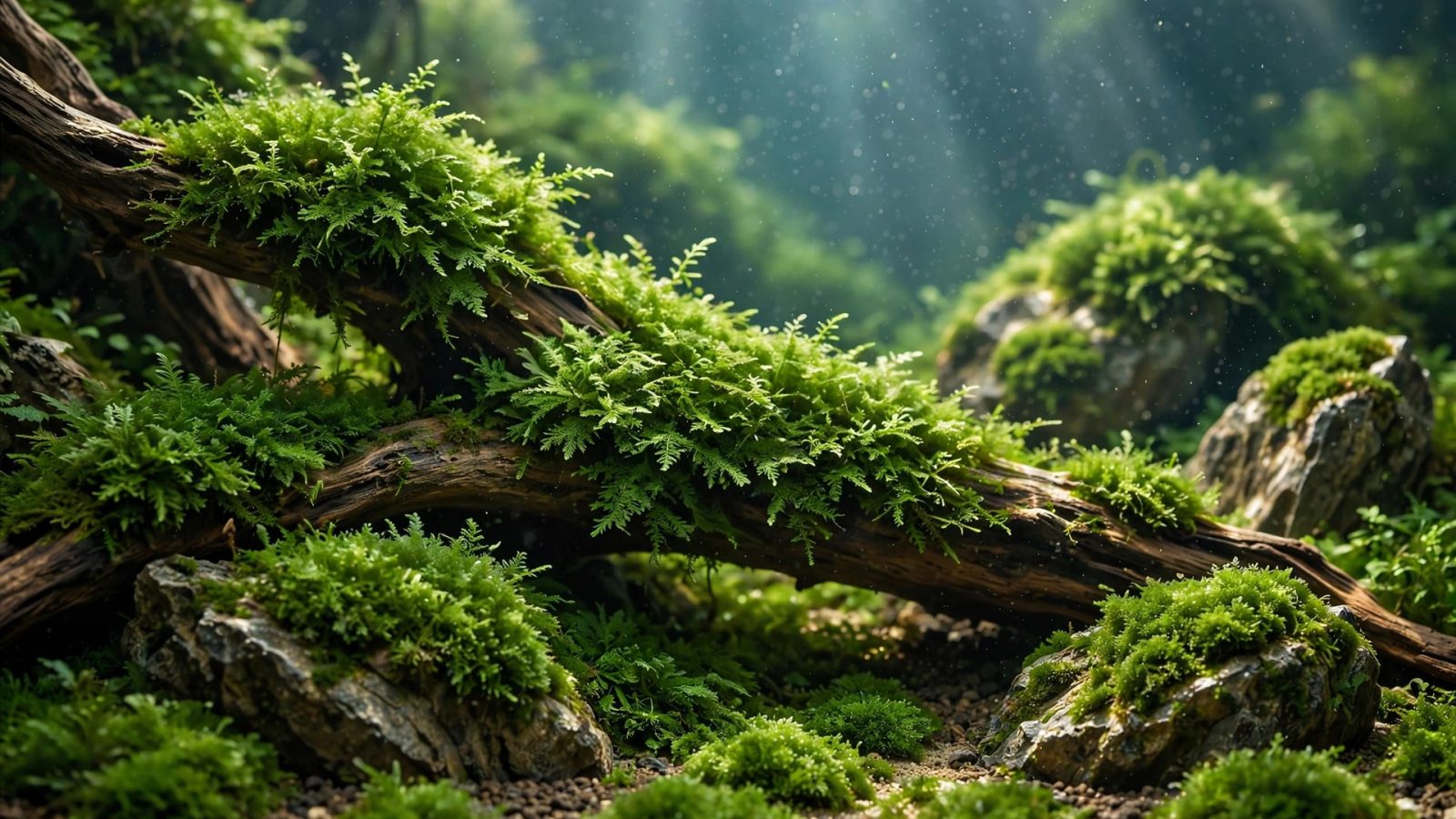
Java moss care is famously undemanding — this is the plant that survives in jars on windowsills, in shipping bags for a week, and in tanks where everything else has given up. Its feathery, branching fronds create the soft, aged look that makes aquascapes feel established, and shrimp and fry treat it as both shelter and cafeteria.
But java moss has a messy side that surprises beginners: it grows into everything, traps debris, and dies off underneath if you let it get too thick. Left unmanaged it becomes a maintenance headache; managed with simple trimming it is one of the most useful plants you can own. This guide covers attaching it properly, keeping it healthy, and using it where it shines — shrimp tanks, breeding setups, and aquascape detailing.
Java Moss Care at a Glance
| Parameter | Recommendation |
|---|---|
| Scientific name | Taxiphyllum barbieri |
| Light | Low to medium (15–40 PAR); very tolerant |
| Temperature | 59–82°F (15–28°C); prefers cooler water |
| pH | 5.5–8.0; extremely adaptable |
| Water hardness | Soft to hard; adaptable |
| CO2 | Not required |
| Fertilizer | Minimal; light liquid dosing optional |
| Growth rate | Slow to moderate |
| Placement | Anywhere — attach to hardscape, mesh, or let float |
| Difficulty | Beginner |
Why Java Moss Is Everywhere
Java moss asks for almost nothing: no substrate, no CO2, no special light, no fertilizer schedule. It absorbs nutrients directly from the water through its tiny leaves, anchors to any surface, and tolerates neglect that would kill stem plants outright. For low-tech tanks, breeding setups, and shrimp colonies, it is less a decoration choice than infrastructure.
Its ecological role is the real story. The dense, branching structure harbors infusoria and biofilm — first food for newborn shrimp and fry. Baby cherry shrimp disappear into a java moss clump and emerge weeks later as juveniles. Egg-scattering fish like danios and tetras spawn in it. No other plant shelters tiny livestock this effectively for this little effort.
How to Attach Java Moss
Java moss has no true roots — it grips surfaces with tiny rhizoids. You need to hold it in place until it attaches (2–4 weeks). The reliable methods:
- Tie it: spread a thin layer over driftwood or rock and wrap with cotton thread or fishing line. Cotton dissolves once the moss grips.
- Glue it: cyanoacrylate gel works — dab small amounts and press moss patches on. Use sparingly; big glue blobs look ugly until moss covers them.
- Sandwich it: place moss between two pieces of stainless-steel or plastic mesh, zip-tie the edges, and lay it flat. This creates instant moss carpets and moss walls.
- Wedge it: stuff it into crevices in hardscape. The simplest method, and surprisingly durable.
The key mistake is attaching it too thick. A thick clump looks lush on day one, but the inner layers get no light or flow and die off, creating a brown core that eventually breaks apart. Thin layers attach faster and stay healthier. For wood specifically, see attaching plants to driftwood.
Light, Temperature, and Water
Java moss tolerates almost any light, but it looks best in low to medium light. Under high light it grows faster and more compactly — but also becomes an algae magnet, and string algae woven through moss is miserable to remove. Moderate light with a 6–8 hour photoperiod is the sweet spot.
Temperature is the parameter worth watching: java moss prefers cooler water and grows noticeably better below 77°F (25°C). In hot tanks pushing 82°F+, growth stalls and the moss can brown. If your tank runs warm, consider alternatives like peacock moss — or just accept slower growth.
Water chemistry barely matters. Java moss grows in soft acidic water and hard alkaline water alike. It does appreciate clean water with some flow — stagnant, debris-filled moss deteriorates.
Trimming: The Essential Maintenance
Trimming is the difference between beautiful java moss and a swampy mess. Untrimmed moss grows into a thick mound; the interior dies from lack of light, detritus accumulates, and the whole mass eventually detaches in an ugly brown clump.
- Trim regularly with sharp scissors, keeping moss patches under an inch thick. Frequent light trims beat rare brutal ones.
- Siphon the trimmings. Every cut fragment can start a new colony wherever it lands — in your filter intake, wrapped around other plants, across the substrate. Net or siphon diligently after every trim.
- Shape deliberately. Moss on driftwood looks best when trimmed to follow the wood’s contours, creating the aged, overgrown look aquascapers prize.
Trimmed moss looks ragged for a week, then the cut ends branch and the patch grows back denser. Regular trimming is also how you keep moss from smothering neighboring slow growers like anubias and bucephalandra.
Java Moss for Shrimp and Breeding Tanks
This is java moss’s highest calling. A generous moss section in a shrimp tank:
- Provides grazing surface for biofilm 24/7
- Shelters newborn shrimplets from even peaceful tankmates
- Traps powdered food where tiny mouths can find it
- Offers spawning medium for egg-scatterers
For breeding setups, a moss wall (mesh sandwich on the back glass) maximizes surface area without sacrificing swimming space. Rinse new moss thoroughly before adding it to shrimp tanks — nursery moss can carry pesticides.
Moss Walls, Trees, and Carpets
Beyond clumps on wood, java moss enables classic aquascaping features:
- Moss wall: mesh sandwich mounted on the back or side glass. Trim flat monthly for a living green backdrop.
- Moss tree: moss tied to branching driftwood, trimmed into a canopy shape. Iconic aquascaping centerpiece.
- Moss carpet: mesh laid flat on the substrate, moss sandwiched inside. Lower-maintenance than dwarf hairgrass carpets but less uniform.
Common Java Moss Problems
Brown or dying patches
Usually the interior of too-thick growth dying from light starvation, or heat stress above 80°F. Thin the patch aggressively, remove brown portions, and keep it trimmed going forward.
Algae infestation
Hair and thread algae love moss structure. Prevention (moderate light, balanced nutrients, algae crew) beats cure. Badly infested moss is often best removed and replaced — cleaning algae from moss without destroying it is nearly impossible. Amano shrimp are the best ongoing defense.
Moss spreading everywhere
Every fragment roots. Be meticulous after trimming, clean filter intakes regularly, and quarantine new moss-covered hardscape before adding it to display tanks.
Not attaching / floating away
Layer too thick, or tied too loosely. Reattach in thinner layers with more tie points. Patience — attachment takes weeks, not days.
Java Moss vs. Other Mosses
- Christmas moss: more structured, triangular fronds; slightly more demanding but prettier.
- Peacock moss: compact and velvety; better for warm tanks.
- Flame moss: grows in vertical spirals; striking but slower.
- Phoenix/Fissidens moss: tiny, feather-like; premium look, slow growth.
Java moss remains the toughest and cheapest. Start with java; upgrade to specialty mosses once you have the trimming habit down.
Java Moss in Paludariums and Terrariums
Java moss’s amphibious nature makes it a paludarium star. Above the waterline in humid setups, it grows as a velvety terrestrial carpet — denser and more compact than its submerged form. Key differences:
- Humidity is mandatory: emersed moss needs 70%+ humidity. In open-top setups it dries and browns; in sealed paludariums it thrives.
- Growth is slower but the texture is finer — prized for miniature landscapes.
- Transition carefully: move moss gradually, keeping it moist during the switch. A sudden dry-out kills the transition.
Pest Control: What Eats Java Moss (and What Doesn’t)
Good news: almost nothing eats healthy java moss. Its texture deters most herbivores. The exceptions:
- Goldfish and large cichlids tear it apart mechanically, not from appetite — they shred it while foraging.
- Malaysian trumpet snails burrow through moss beds harmlessly, aerating them — beneficial, not pests.
- Planaria and hydra colonize moss structure in overfed tanks. They indicate excess food, not a moss problem. Reduce feeding and they decline.
- Algae is the real pest. Prevention (moderate light, balanced nutrients, shrimp crew) is the entire strategy.
Quarantining New Moss
New moss — especially from other hobbyists — can carry unwanted hitchhikers: snail eggs, algae spores, even dragonfly nymphs from outdoor tubs. A simple quarantine protocol:
- Visual inspection: spread the moss thin and pick out visible snails, eggs, or debris.
- Alum dip: soak in 1 tablespoon alum per gallon for 2–3 hours, then rinse thoroughly. Kills snails and most parasites without harming the moss.
- Observation period: keep in a separate container for a week, watching for snail hatchlings or algae blooms.
- Never bleach-dip moss: the fine structure absorbs bleach and dies. Alum or manual cleaning only.
Java Moss Aquascaping Techniques
Beyond basic attachment, moss rewards deliberate aquascaping technique:
- The aging effect: thin moss layers on driftwood branch tips and rock edges simulate years of natural colonization. Apply sparingly — a little moss in the right crevice reads as “ancient”; a lot reads as “neglected.”
- Depth layering: place moss-covered hardscape at multiple depths — foreground stones, midground wood, background branches. The repeated texture creates visual rhythm that ties the scape together.
- Contrast planting: moss’s fine texture contrasts dramatically with bold-leaf plants. A moss-covered branch arching over anubias or cryptocoryne is a foundational aquascaping combination.
- Negative space: resist covering everything. Bare hardscape between moss patches creates the light-and-shadow interplay that makes moss look intentional rather than accidental.
Moss and Water Flow
Flow management separates thriving moss from rotting moss:
- Gentle flow is ideal: enough to deliver nutrients and prevent detritus settling, not enough to tear new growth loose.
- Dead spots kill moss: still corners accumulate debris that smothers the lower layers. Aim filter output to create gentle circulation through moss zones.
- Surface agitation matters: good gas exchange at the surface supports the biofilm and infusoria that make moss ecologically valuable. Do not seal the tank airtight.
- After trimming: temporarily increase flow or add an airstone — the disturbance releases debris that needs flushing out before it settles back into the moss.
Java Moss FAQs
Java moss vs. Christmas moss — which should I buy?
Java moss is tougher, cheaper, and messier; Christmas moss grows in neater triangular fronds but costs more and grows more slowly. For shrimp tanks and breeding mops, java moss wins on value and resilience. For a showpiece moss tree where appearance matters, Christmas moss photographs better. Both attach and trim the same way.
How long until java moss attaches by itself?
Typically three to six weeks, depending on light and temperature. Do not remove the thread or glue anchor early — tugging to “check” resets the clock. Once the moss resists a gentle pull, the anchors can come off and the rhizoids hold it permanently.
Can java moss grow out of water?
Yes, in humid conditions — it is a popular paludarium and terrarium plant. Keep it damp and it creeps across wet wood and rock above the waterline, a useful trick for riparium-style setups where you want planting to continue past the water’s edge.
The Bottom Line
Java moss care is 90% trimming discipline and 10% everything else. Attach it thin, keep it cool and moderately lit, trim it before it gets thick, and clean up every fragment. Do that and you have the hardest-working plant in the hobby — shelter, food source, spawning medium, and aquascaping texture all in one feathery package. Neglect the scissors and you have a compost heap. The choice, as always with moss, is yours.