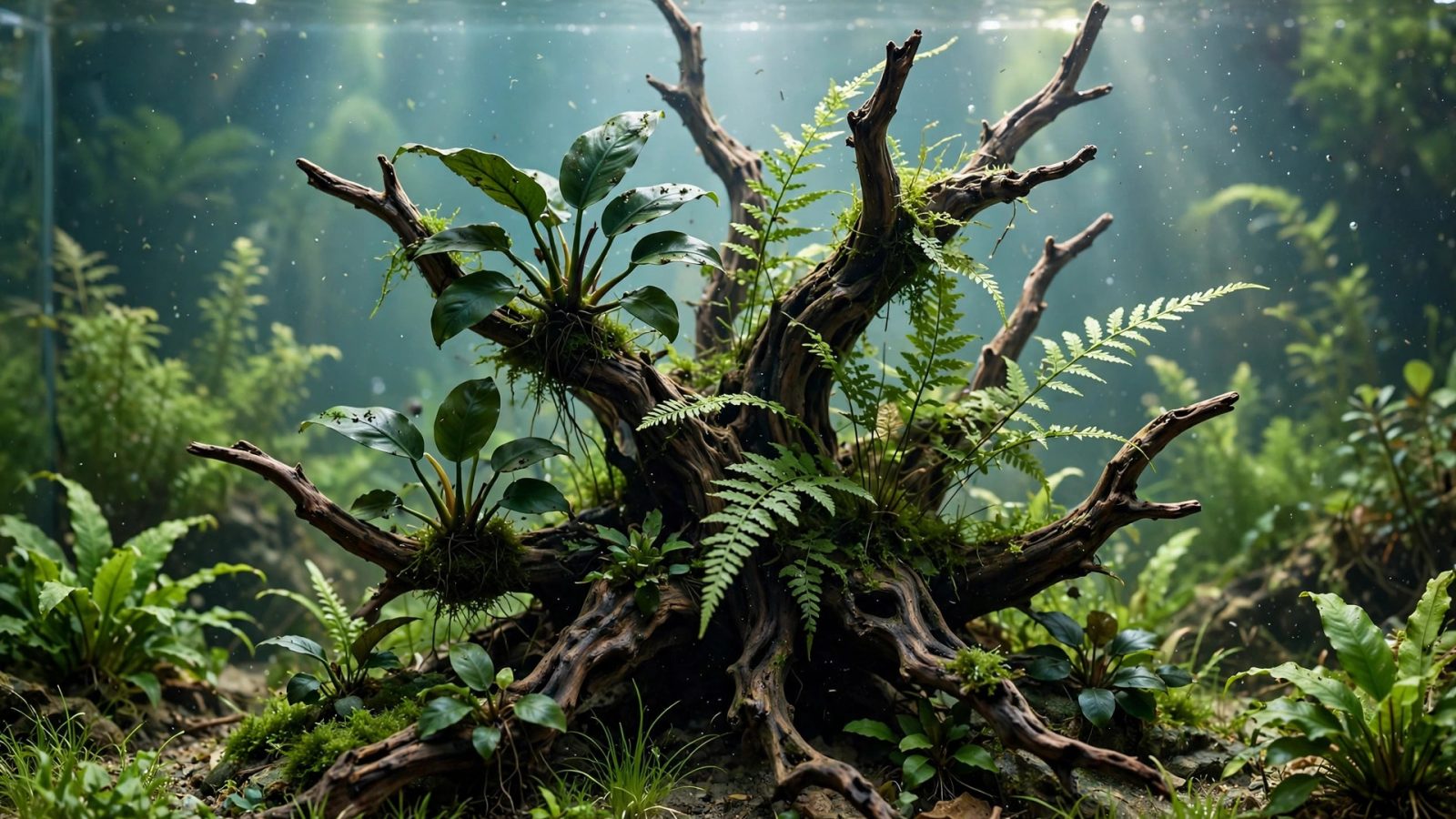
Driftwood is the skeleton of an aquascape — it creates height, guides the eye, and gives epiphyte plants like Anubias, Java fern, and mosses a home. But the best driftwood for aquascaping isn’t one-size-fits-all: spider wood’s branching chaos suits jungle tanks, manzanita’s elegant limbs define nature-style scapes, and mopani’s dense mass anchors bold compositions. Choose wrong and you’ll fight buoyancy, tannin floods, or a piece that visually overwhelms your tank.
Here are the 8 best driftwood types for aquascaping, with honest notes on tannins, buoyancy, longevity, and which scape styles each suits.
What to Look for in Aquascaping Wood
- Structure: Interesting branching, hollows, and texture. The wood should look good from multiple angles — you’ll view it daily.
- Density: Dense hardwoods (mopani, ironwood) sink immediately and last years. Soft woods waterlog faster but decompose sooner.
- Tannin release: All driftwood releases some tannins (the tea-color). Some release for weeks, others for months. It’s harmless — even beneficial — but you should know what to expect.
- Size proportion: Wood should be 1/3 to 2/3 of tank height for a focal piece. Oversized wood in a small tank looks cramped; undersized wood in a large tank disappears.
- Aquarium safety: Only use wood sold for aquariums or positively identified safe species. Random found wood can harbor pesticides, rot, or toxic sap.
1. Spider Wood (Azalea Root) — The Versatile Favorite
Look: Dramatic branching “spider leg” structures, reddish-brown.
Tannins: Moderate — expect 2–6 weeks of tinting.
Buoyancy: Floats initially; waterlogs in 1–3 weeks (weigh down or wedge it).
Spider wood is the most popular aquascaping wood for good reason: every piece is sculptural, the fine branches are perfect for tying moss (creating the famous “moss tree” effect), and it suits everything from nano tanks to large aquascapes. The branches create natural planting pockets for Java fern plantlets and Anubias nana petite. Downside: the showy pieces command premium prices, and thin branches are fragile — handle gently.
2. Manzanita — The Elegant Classic
Look: Smooth, twisting branches with beautiful grain; sandblasted pieces are pale and striking.
Tannins: Low — minimal tinting.
Buoyancy: Dense; usually sinks quickly.
Manzanita is the connoisseur’s wood — the smooth, flowing branches suit nature-style and minimalist Iwagumi-adjacent scapes beautifully. It’s hard, long-lasting (5+ years submerged), and leaches little tannin. The catch is availability and price: genuine manzanita is increasingly regulated/harvest-limited in its native California, so prices have risen and substitutes abound. Buy from reputable aquarium vendors, not craft stores (craft manzanita may be treated).
3. Mopani Wood — The Dense Workhorse
Look: Bold two-tone (dark brown + tan), gnarled, heavy.
Tannins: High — months of strong tea-color without aggressive pre-treatment.
Buoyancy: Sinks like a stone, immediately.
Mopani’s density is its superpower: it sinks instantly, lasts nearly indefinitely, and its dramatic two-tone coloration makes a statement. It’s ideal for cichlid and biotope tanks where bold hardscape suits the livestock. The tannin release is the heaviest of any common aquarium wood — proper preparation ( extended boiling/soaking) is non-negotiable unless you want blackwater. Some aquarists embrace the tint for Amazon biotopes, where it’s authentic.
4. Malaysian Driftwood — The Old Reliable
Look: Dark, twisted, dense; classic “driftwood” appearance.
Tannins: Moderate–high.
Buoyancy: Usually sinks; large pieces may need temporary weighing.
The traditional aquarium wood, widely available and affordable. Malaysian driftwood’s dark color recedes visually, letting plants take center stage — excellent for Dutch-style and jungle tanks where wood is structure, not star. Quality varies enormously: dense, heavy pieces are great; light, soft pieces rot within a year. Choose pieces that feel heavy for their size.
5. Cholla Wood — The Shrimp Specialist
Look: Hollow cactus skeleton tubes with holey texture.
Tannins: Low.
Buoyancy: Floats briefly, then sinks.
Cholla isn’t a scaping centerpiece — it’s functional art for shrimp tanks. The hollow tubes are perfect shrimp hides and grazing surfaces; biofilm colonizes the porous texture rapidly, giving shrimplets constant food. It softens and breaks down over 1–2 years, which is fine — it’s cheap and replaceable. Tuck pieces among plants rather than making them the focal point.
6. Grapevine — The Budget Caution
Look: Twisted, gnarled, attractive.
Tannins: Moderate.
Buoyancy: Floats; slow to waterlog.
Grapevine is cheap and pretty but soft — it decomposes faster than hardwoods (1–2 years) and can grow a harmless white bacterial biofilm when first submerged (shrimp and snails eat it; it passes). Fine for temporary scapes or low-budget builds, but don’t build a 5-year aquascape around it. Never use grapevine from craft stores — it’s often treated with preservatives.
7. Ironwood / Desert Hardwoods — The Lifetime Pieces
Look: Dense, dark, heavy grain.
Tannins: Low–moderate.
Buoyancy: Sinks immediately, permanently.
Various ultra-dense desert hardwoods (sold as ironwood, “desert driftwood”) are the closest thing to permanent aquarium wood — they’ll outlast your interest in the scape. Expensive and heavy (shipping costs are real), but a single statement piece can anchor a large tank for a decade. Minimal tannins, zero buoyancy fuss.
8. Bonsai Driftwood Trees — The Instant Aquascape
Look: Hand-assembled “trees” from spider wood or similar on a base.
Tannins: Per the component wood (usually moderate).
Buoyancy: Weighted base; sinks.
These manufactured trees (wood branches mounted on a slate/wood base) create the iconic underwater-bonsai look instantly — add moss to the “canopy” and you have a centerpiece in an afternoon. Purists sniff, but the results photograph beautifully. Quality varies: check that joints are secured with aquarium-safe methods (not metal pins that rust).
Attaching Plants to Driftwood
Wood’s greatest planted-tank role is as a plant mount. Epiphytes — Anubias, Java fern, bucephalandra, mosses — attach to wood with:
- Cyanoacrylate gel super glue: Aquarium-safe when cured, instant hold. The standard method — apply gel to rhizome, press to wood for 30 seconds.
- Cotton thread or fishing line: Traditional; tie moss or rhizomes on, remove after roots grip (2–3 months).
- Wedge method: Push rhizomes into natural crevices — no adhesive needed, most natural look.
Full technique details are in our driftwood planting guide.
Wood and Water Chemistry
All driftwood releases tannins (tannic and humic acids) that tint water and mildly lower pH. This is harmless to fish and plants — many Amazonian and Southeast Asian species evolved in tannin-rich blackwater and show better color and breeding behavior in it. If you dislike the tea color, activated carbon or Purigen removes it; the wood eventually exhausts its tannin supply (weeks to months depending on type and preparation).
One caution: very large amounts of mopani or Malaysian wood in a small tank can drop pH significantly in soft water. Test weekly for the first month with big wood additions.
Choosing Wood for Your Scape Style
- Nature style / Iwagumi-adjacent: Manzanita or spider wood — elegant branching.
- Jungle / Dutch: Malaysian driftwood — dark structural presence.
- Biotope (Amazon): Mopani — authentic look, embrace the tannins.
- Nano tanks: Small spider wood pieces or cholla accents — proportion is everything (see nano hardscape).
- Shrimp tanks: Cholla + spider wood branches for grazing.
Preparation Reminder
Every wood type benefits from preparation — scrubbing, soaking, and usually boiling — before it goes in your tank. Our driftwood preparation guide covers the full protocol: how long to boil each type, how to handle floaters, and the tannin-management timeline.
Buying Driftwood: What to Inspect
Whether buying online or in-store, evaluate pieces critically:
- Weight: Heavier = denser = longer-lasting. A piece that feels suspiciously light for its size is either soft wood or partially rotted.
- Smell: Should smell woody/earthy, not chemical, not rotten. Chemical smells mean treatment — reject.
- Soft spots: Press suspicious areas with a fingernail. Punky, soft wood will rot quickly submerged. Surface softness on otherwise hard wood is usually fine (it’s just weathered exterior).
- Structure from all angles: Rotate the piece. Aquascaping wood is viewed from front, sides, and top — a piece that’s stunning from one angle and boring from others limits your layout options.
- Branch tips: Fine, intricate branch tips are what make spider wood and manzanita special — and what breaks in shipping. For online orders, accept some risk or buy from vendors who pack well.
The White Biofilm: Don’t Panic
New driftwood often grows a white/translucent slime within the first weeks — a bacterial/fungal biofilm feeding on surface sugars in the wood. It’s harmless, shrimp and snails devour it eagerly, and it disappears on its own in 2–6 weeks. Don’t scrub it off aggressively (it returns), don’t medicate, don’t panic. If it’s unsightly, spot-clean with a soft brush during water changes and let biology handle the rest. Grapevine and spider wood are the most enthusiastic biofilm producers.
Long-Term Wood Care
Driftwood isn’t maintenance-free forever:
- Soft woods (grapevine, cholla) need replacement every 1–2 years as they soften. Plan for it — don’t attach your prize Anubias collection’s only specimen to a piece with a known expiry date.
- Hard woods (mopani, manzanita, ironwood) last 5–10+ years. They darken with age and biofilm, which most aquarists find attractive — aged wood looks more natural.
- Algae on wood is normal and often desirable — a light green dusting on hardscape looks natural. Black beard algae on wood is the problematic one; address the underlying CO₂/light imbalance rather than scrubbing endlessly.
- Repositioning: Wood shifts as it waterlogs fully. Check stability monthly for the first 3 months — a slowly sinking piece can topple onto plants or crack glass if it falls from height against the pane.
Wood in Low-Tech vs High-Tech Tanks
Driftwood works identically in both — but its role differs. In low-tech tanks, wood-mounted epiphytes (Anubias, Java fern, mosses) are often the primary planting, since they thrive without CO₂. The wood becomes the garden itself. In high-tech tanks, wood is more often structural — a complement to demanding substrate-rooted plants. Either way, choose wood for its hardscape merit first; the plants adapt.
Frequently Asked Questions
Can I collect my own driftwood?
Yes, with care: only hardwood species (oak, maple, beech are safe; avoid pine/cedar/conifers — their resins are toxic), only from unpolluted areas, never from orchards or treated landscapes (pesticides), and prepare it thoroughly (scrub, boil, soak for weeks). When in doubt, buy aquarium-specific wood — the savings aren’t worth poisoning a tank.
How do I make floating wood sink faster?
Boiling accelerates waterlogging dramatically — boiled pieces often sink within days versus weeks. Alternatively, screw the piece to a slate base (stainless steel screws), wedge it under rocks, or tie it down with fishing line to a buried anchor for the first month.
Will driftwood stain my silicone?
Prolonged contact with heavy tannin leachers (mopani especially) can stain silicone slightly brown. It’s cosmetic and usually fades. Positioning wood away from silicone seams during the heavy-leach phase minimizes it.
Can I use the same wood in a terrarium later?
Yes — aquarium wood works fine in humid terrariums/vivariums after drying out. The biofilm and waterlogging don’t harm it for terrestrial use.
Arranging Multiple Pieces: Composition Basics
Single statement pieces are simplest, but multi-piece arrangements create the most dynamic scapes. Principles that work:
- Odd numbers: 3 or 5 pieces compose more naturally than 2 or 4 — the eye doesn’t pair them off symmetrically.
- One hero, supporting cast: A single dominant piece with smaller satellites reads as intentional; five equal pieces read as clutter.
- Flow direction: Angle branches to imply movement — all flowing one way suggests wind or current; it’s the technique behind the most photographed nature-style scapes.
- Golden ratio placement: Position the main piece’s focal point roughly 1/3 from either side, not dead center. Centered hardscape looks static.
- Negative space: The empty areas are as important as the wood. Resist filling every gap — breathing room makes the arrangement feel larger than the tank.
- Test dry: Arrange on a table first, photograph from the front, live with the photo for a day. You’ll see compositional flaws in a photo that your eyes miss in person.
Wood and Substrate Pairings
Certain combinations are classics for a reason: dark Malaysian wood over light pool-filter sand (striking contrast, plants pop); manzanita’s pale branches over dark aquasoil (elegant, gallery-like); mopani’s bold mass planted in rich substrate with heavy root feeders around its base (jungle power). Match wood tone against substrate tone deliberately — monochrome (dark on dark) recedes and calms; contrast (light on dark) dramatizes.
Whatever wood you choose, prepare it properly before it meets your tank — the next guide covers exactly how.