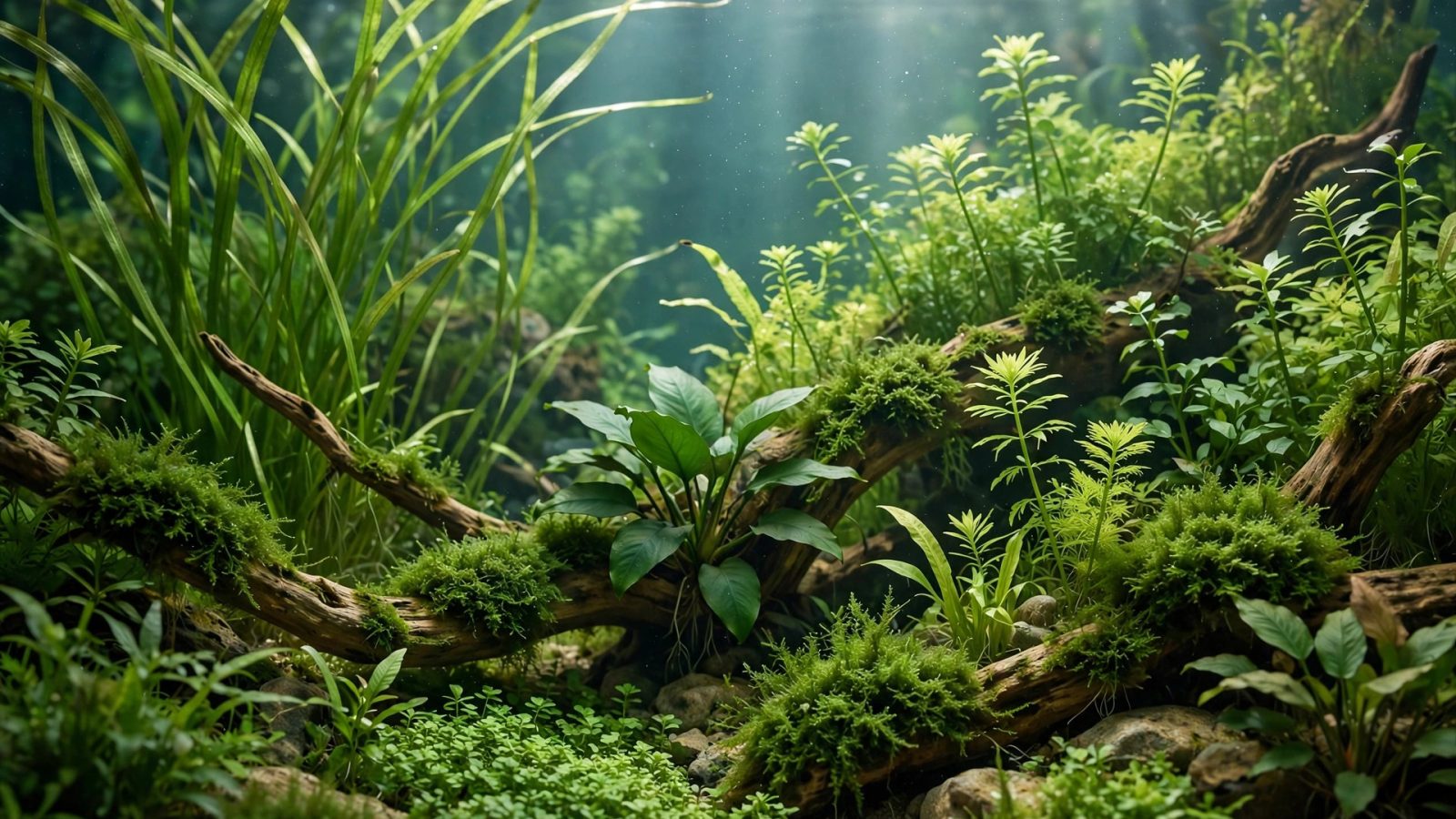
Choosing the best liquid fertilizer for aquarium plants feels overwhelming — dozens of bottles, competing claims, and forum arguments about which one “actually works.” The reality is simpler: most reputable all-in-one fertilizers grow plants well, and the differences that matter are concentration (cost per dose), completeness (does it include everything?), and whether it fits your tank’s needs. This guide compares the six best liquid fertilizers for planted tanks, explains what to look for, and helps you pick the right one without overspending.
What Makes a Good Liquid Fertilizer
Before the roundup, the criteria:
- All-in-one completeness — contains macros (N, P, K) and micros (iron, trace elements). Incomplete fertilizers that skip macros are the #1 cause of “I’m dosing but my plants are starving” complaints.
- Concentration — how many doses per bottle. A $20 bottle that lasts 6 months beats a $12 bottle that lasts 6 weeks.
- Clarity of dosing instructions — beginner-friendly pump bottles with per-gallon guidance beat cryptic “dose as needed” labels.
- Shrimp and livestock safety — all fertilizers on this list are safe for fish and shrimp at recommended doses (copper levels in micros are far below toxic thresholds, despite persistent forum myths).
Pair whichever you choose with our beginner fertilizer schedule — the bottle matters less than the routine.
The 6 Best Liquid Fertilizers
1. NilocG Thrive — Best overall for most tanks
Thrive is the hobby’s most recommended all-in-one for good reason: it’s highly concentrated (a 500ml bottle doses a 20-gallon tank for roughly 4–6 months), contains complete macros and micros, and comes in variants for different setups — standard Thrive, ThriveS (shrimp-safe formula with lower copper, for the extra-cautious), and Thrive+ (extra nitrogen for high-tech tanks). The pump-top bottle makes dosing foolproof. If you want one recommendation and no further research, this is it.
Best for: beginners through advanced hobbyists; low-tech and high-tech tanks alike.
Watch for: the standard formula is rich in nitrates — in lightly stocked tanks, that’s a feature; in heavily stocked tanks, consider ThriveS or a leaner formula.
2. Aquarium Co-Op Easy Green — Best for beginners
Easy Green was designed specifically to remove beginner confusion: one bottle, one pump per 10 gallons, done. It’s a true all-in-one with a strong reputation in the beginner community, and Aquarium Co-Op’s dosing guidance (including their estimated-index-inspired schedule) is among the clearest in the industry. Slightly less concentrated than Thrive, so the per-dose cost runs a bit higher — a fair trade for the simplicity.
Best for: first-time planted tank owners who want zero guesswork.
Watch for: heavier tanks may need the “medium light” dosing tier; start at the bottle recommendation and adjust per plant response.
3. Seachem Flourish Comprehensive — Best widely available
Flourish is the bottle you’ll find in every pet store on earth, and it’s a solid micro-focused formula. The catch beginners miss: Flourish Comprehensive is primarily micros — it’s lean on macros (N, P, K), which Seachem sells as separate bottles (Flourish Nitrogen, Phosphorus, Potassium). Used alone in a demanding tank, it’s incomplete; used as the micro component of the full Seachem line, it’s excellent. Buy it knowing what it is.
Best for: hobbyists who want the modular Seachem system, or low-demand tanks where fish waste covers macros.
Watch for: if your stem plants are pale and stunted on Flourish alone, you need the macro bottles too — see nutrient deficiency signs.
4. APT Complete by 2Hr Aquarist — Best for high-tech tanks
APT Complete (from the 2Hr Aquarist team) is formulated for demanding high-tech setups: rich micros, balanced macros, and dosing guidance tuned for CO2-injected tanks with strong light. It also comes in APT Zero (no nitrates/phosphates, for heavily stocked tanks) and APT Sky (leaner, for low-tech). The line’s strength is matching the formula to the setup — pick the variant for your tank type rather than defaulting to Complete.
Best for: CO2-injected tanks and aquascapers chasing demanding species.
Watch for: premium pricing; overkill for a low-tech anubias-and-java-fern tank.
5. UNS Plant Food / All-in-One — Best premium pick
Ultum Nature Systems’ all-in-one is the aquascaper’s choice — clean formulation, excellent results in show tanks, and packaging that doesn’t embarrass your stand. Performance is on par with Thrive and APT; you’re paying partly for the brand and the aesthetic. Worth it if you value the complete UNS ecosystem (their aquasoil and hardscape pair naturally).
Best for: aquascapers already in the UNS product line.
Watch for: availability is spottier than the big brands; price per dose runs high.
6. Dry fertilizers (EI salts) — Best long-term value
Not a bottle at all: dry potassium nitrate, monopotassium phosphate, and CSM+B micros, mixed into your own solutions. The upfront learning curve is real, but the economics are unbeatable — a $30 dry fert kit lasts years for a typical tank, versus $40–80/year for bottled liquids. If you’re committed to the hobby, this is where you end up. Our dry vs liquid comparison covers the full cost math and the mixing process.
Best for: multi-tank owners and committed hobbyists ready to mix their own.
Watch for: requires a gram scale, storage jars, and willingness to follow a mixing recipe.
Quick Comparison
- Easiest for beginners: Aquarium Co-Op Easy Green
- Best value per dose: NilocG Thrive
- Best for high-tech: APT Complete
- Easiest to find locally: Seachem Flourish line (remember the macros!)
- Cheapest long-term: Dry EI fertilizers
Fertilizers to Be Skeptical Of
- “CO2 boosters” (glutaraldehyde products) — marketed as liquid CO2, but they’re algaecides, not carbon sources. Our liquid vs pressurized CO2 comparison explains why.
- Iron-only supplements as a complete solution — iron fixes iron deficiency; it doesn’t replace a complete fertilizer. Pale plants need diagnosis (see deficiency guide), not a random iron dump.
- Miracle “one squirt grows everything” products with no ingredient list — if they won’t tell you what’s in it, don’t put it in your tank.
How to Read a Fertilizer Label (What the Numbers Mean)
Fertilizer labels hide in plain sight — once you can decode them, marketing claims lose their power and you can compare products on substance instead of branding.
The N-P-K ratio
Labels list nitrogen, phosphorus, and potassium as three numbers (e.g., 2-1-3). These are percentages by weight of the concentrate, not the dosed tank water — so you can’t directly compare a concentrated product’s NPK against a dilute one’s. What the ratio does tell you is the manufacturer’s philosophy: high first number means nitrogen-heavy (good for heavily planted, lightly stocked tanks); balanced ratios suit average setups; near-zero phosphorus is common in products designed for tanks with heavy fish loads (the fish provide the phosphate).
“Comprehensive” vs “macros” vs “micros”
- All-in-one / comprehensive: contains macros (N, P, K) plus micros (iron, traces) in one bottle. Simplest option — one pump, done. The trade-off is fixed ratios you can’t adjust independently.
- Macro-only: NPK without micros. For tanks where a separate micro product is preferred, or where micros come from another source.
- Micro-only / trace: iron and trace elements without macros. Useful when fish waste already supplies nitrogen and phosphorus — common in heavily stocked tanks.
- Iron-specific: chelated iron for targeting the pale-new-growth of iron deficiency. A specialist tool, not a daily driver.
Chelated vs non-chelated iron
Iron is the micro that matters most, and its form matters: chelated iron (EDTA, DTPA, or EDDHA chelates) stays available in aquarium water for days; non-chelated iron precipitates out within hours and never reaches your plants. DTPA-chelated iron is the sweet spot for most tanks (stable at typical pH); EDDHA is the most stable but tints water slightly red. If a product doesn’t specify chelated iron, assume the worst.
Red flags on labels
- “Contains no nitrates or phosphates!” marketed as a feature — for a planted tank, that’s a bug. Plants need nitrogen and phosphorus; a fertilizer without them is an incomplete product (fine only if your fish supply them, which the label won’t tell you).
- Glutaraldehyde listed as an ingredient — that’s “liquid carbon,” an algaecide marketed as CO2 replacement. It’s not fertilizer and it’s not harmless; see our liquid CO2 comparison.
- No guaranteed analysis at all — just “proprietary blend” and plant pictures. Reputable manufacturers publish NPK and iron content. Mystery bottles get mystery results.
Dosing by Tank Type: Three Sample Regimens
Low-tech 20-gallon, moderate planting
- All-in-one (Easy Green, Thrive, or similar): half the label dose, twice weekly
- Root tabs near swords/crypts every 3 months
- Expected monthly cost: $3–5
High-tech 40-gallon, CO2 injected, dense planting
- All-in-one at full label dose 3x weekly, or EI-style separate macro/micro dosing
- Monitor nitrate: if it climbs above 20ppm between changes, you’re overdosing for your plant mass
- 50% weekly water change mandatory
- Expected monthly cost: $8–15 (or $2–3 with dry ferts)
Shrimp tank, 10-gallon, slow growers
- Micro-focused or lean all-in-one at quarter dose weekly — shrimp are sensitive to copper and sudden parameter shifts, and slow plants need little
- Check the label for copper content; shrimp-safe products keep it chelated and minimal
- Stability beats generosity: same tiny dose every week, no spikes
When to Switch Fertilizers
Loyalty to a fertilizer brand is unnecessary — switch when the evidence says so:
- Persistent deficiencies despite correct dosing — if you’re dosing per label and still seeing pinholes (potassium) or pale new growth (iron), the product’s ratio doesn’t suit your tank. Switch to one with a different NPK balance or add a targeted supplement.
- Your tank changed — the lean all-in-one that was perfect for your low-tech starter is wrong for the high-tech scape it became. Reassess at every major tank transition.
- You’re dosing around the product — if you find yourself adding separate potassium, separate iron, and extra nitrogen on top of your “all-in-one,” the all-in-one isn’t the right one. Either switch products or move to dry salts where you control each nutrient.
- Cost stops making sense — when you’re buying a bottle a month, run the dry vs liquid numbers. Most hobbyists switch to dry between tanks two and three.
When switching, transition gradually: halve the old product while introducing the new at half dose for a week, then full switch. Abrupt fertilizer changes can trigger the deficiency-fluctuation algae that stability avoids.
Storing and Handling: Getting the Full Shelf Life
Liquid fertilizer is chemistry in a bottle, and chemistry degrades with poor storage:
- Keep it dark and cool. Light breaks down chelated iron — the most valuable micro in the bottle. A cupboard beats a windowsill; the cabinet under the tank is ideal.
- Watch the expiry. Unopened, most liquid ferts last 2–3 years. Opened, use within 12–18 months — iron chelates slowly degrade once exposed to air, and you’ll notice declining effectiveness (pale new growth despite correct dosing) before any visible change.
- Don’t decant into clear bottles. That attractive clear dosing bottle on your shelf is degrading your fertilizer with every photon. Keep the stock in its opaque original and only decant what you’ll use within a week or two.
- Shake before dosing. Micros can settle or stratify over weeks of sitting. A quick shake homogenizes the solution — thirty seconds that ensures the dose matches the label.
- Keep pumps clean. Dosing pumps clog with crystallized fertilizer; a monthly rinse in warm water keeps them accurate. An under-dosing pump mimics a deficiency and sends you chasing phantom problems.
Frequently Asked Questions
Can I just use garden fertilizer in my aquarium?
No — garden fertilizers contain ammonia-based nitrogen, urea, and sometimes heavy metals at concentrations safe for soil but toxic in water. The one partial exception is pure dry salts (KNO3, KH2PO4) from reputable sources, which are chemically identical to aquarium dry ferts — but garden-center products of unknown purity aren’t worth the risk. Aquarium-specific dry kits cost little more and remove the gamble.
Do I need a different fertilizer for red plants?
Mostly no. Red coloration comes primarily from high light and nitrate limitation, not from a special fertilizer — “red plant fertilizer” is largely marketing. What red plants actually need is adequate iron (for chlorophyll function, ironically) and strong light. Save your money for a better light.
How long does a bottle last?
A 500ml all-in-one at standard dosing lasts a 20-gallon tank roughly 2–4 months. If you’re going through it faster, check whether you’re overdosing — or whether your tank has quietly become the kind of high-demand setup that justifies switching to dry ferts.
Should I refrigerate liquid fertilizer?
Room temperature, dark cupboard is fine for commercial products — they’re formulated with preservatives. DIY-mixed solutions (from dry salts) benefit from refrigeration and last 1–2 months; add a drop of Excel/glutaraldehyde-free preservative… actually just mix smaller batches more often. If a solution grows mold, discard it — mold means contamination, and the nutrient content is unreliable afterward.
How Much to Dose (Regardless of Brand)
Start with the bottle’s recommendation for your tank size, then follow the weekly schedule pattern (split across 2–3 dose days, never on water-change day). New tanks start at half dose for the first month. Adjust based on plant response over 4 weeks — not days. And remember that liquid fertilizer is only half the nutrition story if you keep heavy root feeders; pair it with root tabs for swords, crypts, and vallisneria.
The best liquid fertilizer is the one you’ll dose consistently. Pick from the list above based on your tank type and budget, put it on a schedule, and spend the mental energy you saved on the things that matter more: light, CO2 stability, and trimming on time.