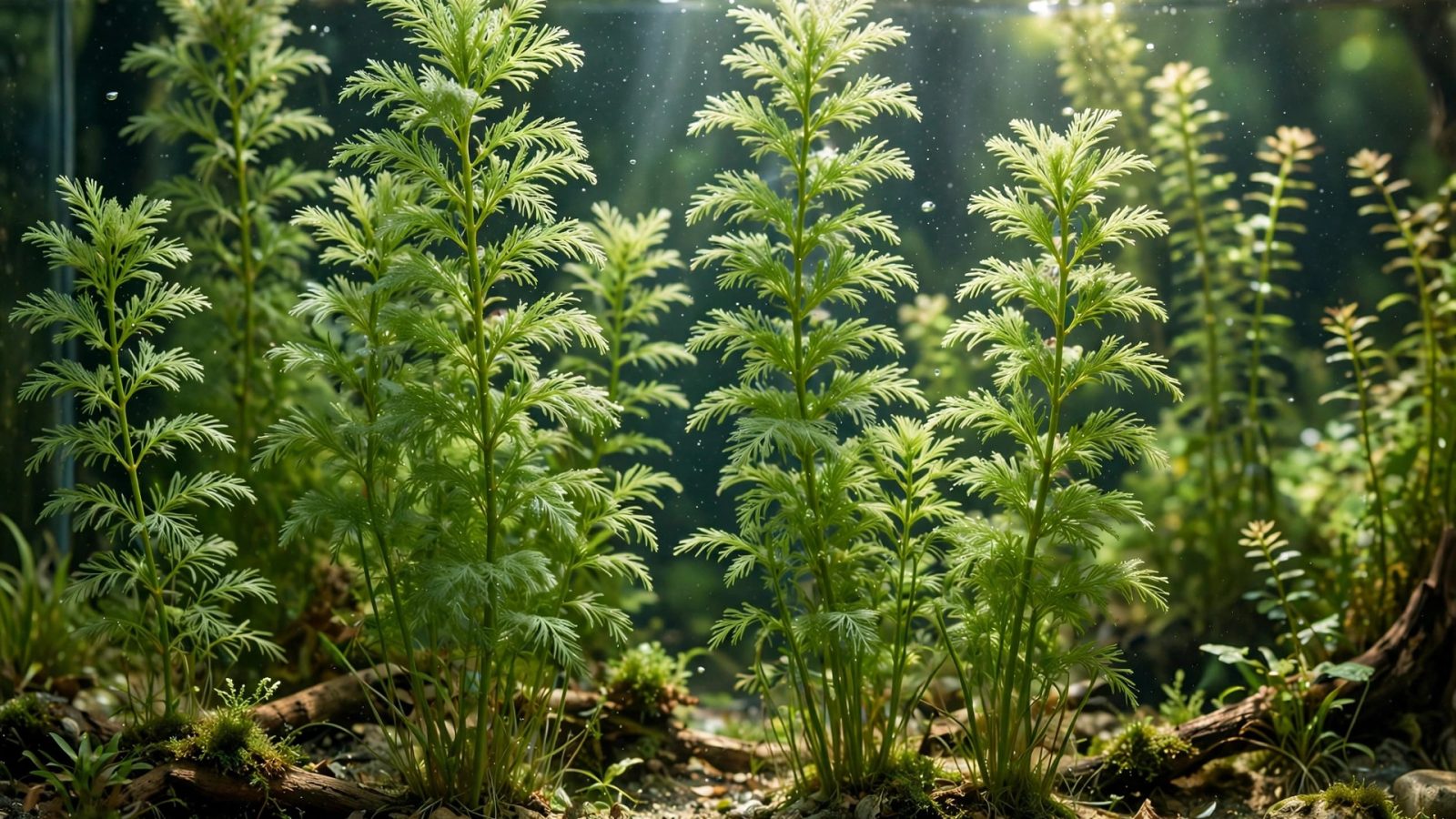
Water wisteria care is the definition of beginner-friendly. Hygrophila difformis grows fast in almost any conditions, shrugs off beginner mistakes, and performs a genuinely useful service: it vacuums excess nutrients from the water, starving algae in new tanks where imbalances are worst. If your new setup is fighting the ugly early algae phase, water wisteria is one of the best plants you can add.
It also has a party trick — its leaves change shape dramatically between emersed and submersed growth, from rounded to finely lace-like. This guide covers using wisteria as a nutrient sponge, managing its enthusiastic growth, and the two ways to grow it (planted and floating).
Water Wisteria Care at a Glance
| Parameter | Recommendation |
|---|---|
| Scientific name | Hygrophila difformis |
| Light | Low to high; very adaptable (20–60 PAR) |
| Temperature | 68–82°F (20–28°C) |
| pH | 6.0–7.5 |
| Water hardness | Soft to hard; very adaptable |
| CO2 | Not required |
| Fertilizer | Benefits from comprehensive liquid; root tabs optional |
| Growth rate | Fast — one of the fastest stem plants |
| Placement | Background (planted) or floating |
| Max size | 12–20 inches planted; spreads at surface when floating |
| Difficulty | Beginner |
The Nutrient Sponge: Why Wisteria Belongs in New Tanks
New aquariums go through an ugly phase: ammonia spikes, diatoms, hair algae — the works. Fast-growing stem plants are the standard countermeasure because they consume the excess nitrogen and phosphorus that fuel algae, and few plants do this faster than water wisteria. A bunch of wisteria in a cycling tank measurably reduces nitrate and outcompetes algae for dissolved nutrients.
This makes wisteria ideal for the new-tank plant strategy: plant heavily with fast growers on day one, let them stabilize the system, then gradually replace them with your long-term aquascape choices — or keep the wisteria, because plenty of keepers do.
Leaf Shape Change: Emersed vs. Submersed
Water wisteria’s curiosity-hook feature: nursery plants grown emersed have broad, rounded leaves, but submerged growth emerges as delicate, deeply divided lace-like foliage. New keepers often think they received the wrong plant when the new growth looks nothing like the old.
Both forms are the same plant. The emersed leaves will gradually yellow and can be trimmed away as submersed growth takes over — usually within 3–4 weeks. The lacy submersed form is more attractive and a better nutrient sponge, so the transition is worth the wait.
Planting and Floating: Two Methods
Planted: push stems 1–2 inches into the substrate, spacing them an inch apart. Strip the lower leaves from the buried portion to prevent rot. Wisteria roots readily from stem nodes — no rooting hormone or special treatment needed. It grows in plain gravel, sand, or aquasoil; substrate matters less than for heavy root feeders like Amazon swords.
Floating: simply drop stems on the surface. They grow roots downward and leaves upward, forming a floating mat that shades the tank below and consumes nutrients aggressively. Floating wisteria is excellent for betta tanks and fry-rearing setups. Thin it regularly — it multiplies fast and can block all light if ignored.
Light and Fertilizer
Wisteria tolerates low light but shows its best form — compact, intensely lacy growth — under medium to high light. In low light it grows leggier with wider-spaced leaves, reaching for the lamp. Either way it grows; light just determines how pretty.
As a fast grower, wisteria is a meaningful nutrient consumer. In low-tech tanks, a comprehensive liquid fertilizer 1–2 times weekly keeps it green and growing; in tanks with nutrient-rich substrate, it may need nothing at all. Paradoxically, the classic wisteria problem is too few nutrients in mature, lightly stocked tanks — the plant that once thrived starts developing pinholes (potassium deficiency) as it exhausts the water. The fertilizer guide explains how to read these signals.
CO2 is unnecessary but, as with all fast stem plants, it accelerates everything — growth, nutrient uptake, and the need for trimming.
Trimming and Propagation
Wisteria’s vigor means regular maintenance:
- Top and replant: when stems reach the surface, cut the top half and replant it. The bottom portion branches from the cut node, growing bushier.
- Thin aggressively. A wisteria thicket shades everything below it. Remove whole stems at the base to let light through.
- Propagation is trivial: every cutting roots. A single stem becomes a background hedge within two months. Give trimmings to fellow hobbyists — every club needs a wisteria donor.
Never compost healthy trimmings if your local club or store takes donations — fast growers like wisteria are the backbone of the hobby’s plant-sharing economy.
Common Water Wisteria Problems
Melting after introduction
Emersed-to-submersed transition. The old rounded leaves dissolve; lacy new growth replaces them. As long as stems stay firm, recovery is certain. See why plants melt.
Pinholes in older leaves
Potassium deficiency — the plant cannibalizes old leaves to feed fast new growth. Dose a potassium-containing fertilizer. Compare with our holes-in-leaves diagnosis.
Leggy, sparse growth
Insufficient light. Move to a brighter spot or upgrade lighting; trim hard to encourage branching lower down.
Stalled growth in an established tank
The tank’s nutrients no longer support a fast grower — common in mature, lightly stocked low-tech tanks. Either fertilize more or accept that wisteria’s job as nutrient sponge is done and replace it with slower plants.
Taking over the tank
Working as intended. Weekly trimming during peak growth keeps it in bounds. Floating wisteria especially needs a thinning schedule — remove a third of the mat weekly.
Wisteria in Aquascaping
Aquascapers use wisteria as a background filler and a “nurse plant” — it holds the scape together visually while slower feature plants establish, then gets partially removed. Its fine texture contrasts beautifully with broad-leaf plants like anubias and swords. In jungle-style tanks, its exuberance is the entire point.
Water Wisteria in Outdoor Ponds and Tubs
Wisteria’s vigor makes it a natural for summer patio tubs and ponds. Outdoors it grows with an enthusiasm that indoor tanks rarely see — full sun and unlimited CO2 produce specimen plants in weeks.
- Container choice: any watertight tub works. A 20-gallon patio pond with wisteria, a few hornwort stems, and no fish is a self-sustaining ecosystem.
- Mosquito control: add a few mosquito fish or a small solar air pump — stagnant wisteria tubs breed mosquitoes enthusiastically.
- Overwintering: wisteria is tropical and dies below 50°F. Bring stems indoors before first frost; they overwinter easily in a bucket under a desk lamp.
- Free fertilizer: outdoor tubs accumulate nutrients from dust, leaves, and rain — wisteria converts this into growth with zero dosing.
Nutrient Dosing Details for Fast Growers
Wisteria’s speed makes it the canary in the coal mine for nutrient issues. Learn to read it:
- Deep green, fast growth: nutrition is balanced. Change nothing.
- Pale new leaves, green veins: iron deficiency. Add an iron-containing fertilizer.
- Pinholes in old leaves: potassium deficiency. The plant is cannibalizing old growth — increase potassium.
- Yellow old leaves, stunted new growth: nitrogen deficiency. Uncommon in stocked tanks, common in plant-only setups. Add a nitrogen source.
- Stunted, twisted new growth: calcium or magnesium issue — rare, usually in very soft RO water without remineralization.
Because wisteria grows so fast, deficiencies show in days rather than weeks — making it a living test kit for your fertilization regime. Cross-reference symptoms with our nutrient deficiency guide for photos.
Wisteria as a Learning Plant
Experienced keepers recommend wisteria as a first plant for a reason beyond hardiness: it teaches. Its fast growth makes cause-and-effect visible — change the light, see the response in days; adjust fertilizer, watch new leaves within a week. Slow plants hide mistakes for months; wisteria reveals them immediately, training your eye for the subtle signals all plants give. Every expert started with a fast grower that showed them how plants talk.
Water Wisteria FAQs
Can water wisteria grow floating?
Yes, and it often grows faster floating than planted. Floating wisteria gets unlimited CO2 from the air and first pick of the light, so it doubles as a nutrient sponge and a fry refuge. The trade-off is that floating stems shade everything below, so thin the mat weekly in smaller tanks. If you want the lacy submersed leaf form for aquascaping, plant it — floating leaves stay rounder and less feathery.
Why did my wisteria’s leaves change shape?
Nursery stock is grown emersed, out of water, with rounded leaves. Once submerged, the plant sheds those leaves and grows finely dissected submersed foliage. The transition looks alarming — old leaves yellowing and dropping — but it is normal. Leave the stems in place and watch for new lacy growth at the tips within one to two weeks.
How fast does water wisteria actually grow?
In a moderately lit tank with some fertilizer, expect several inches per week. It is one of the fastest stem plants in the hobby, which is exactly why it works as an algae-fighting nutrient sponge. Trim weekly or it will reach the surface and sprawl across the top of the tank.
Is water wisteria safe for shrimp and fry?
Completely. Dense wisteria thickets are prime grazing and hiding habitat for cherry shrimp and newborn fry. Many breeders float a clump specifically as a nursery zone, and the fine submersed leaves give shrimplets surfaces to graze biofilm from day one.
The Bottom Line
Water wisteria care is simple because the plant wants to grow — your job is mostly steering. Plant it in new tanks as a nutrient sponge, trim it before it takes over, and enjoy the lacy transformation from nursery stock to submerged foliage. It will not win aquascaping contests on its own, but no plant earns its keep more reliably. Every hobbyist should grow wisteria at least once; most never stop.