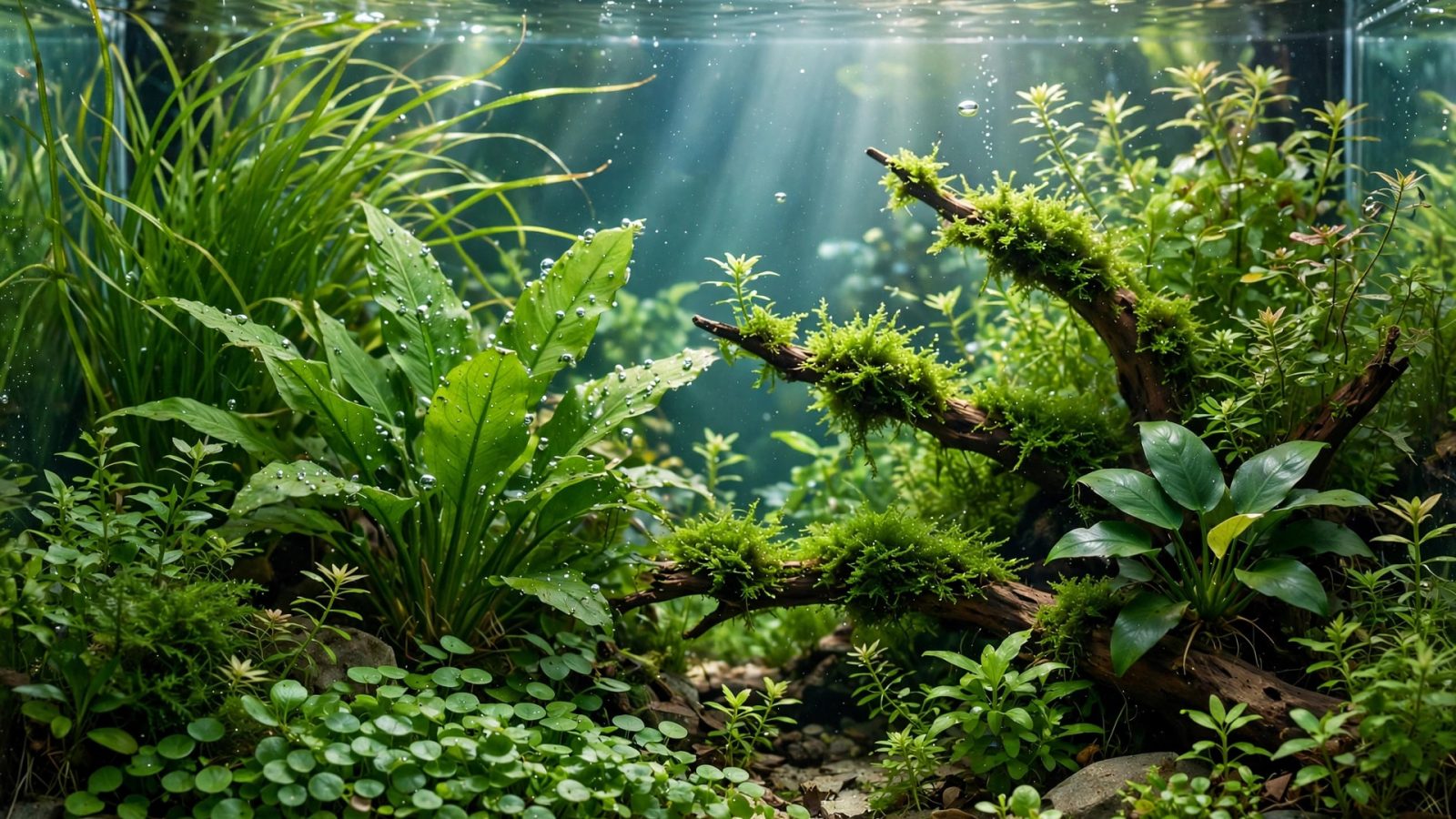
Do aquarium plants need water changes? It’s a fair question — if plants consume nitrates and purify water, why keep changing it? The short answer is yes: planted tanks still need regular water changes, though often for different reasons than fish-only tanks. Plants handle part of the filtration job, but they can’t do all of it — and skipping water changes in a planted tank causes a specific set of problems that build slowly and then arrive all at once.
What Water Changes Do That Plants Can’t
Aquarium plants are excellent at absorbing ammonia, nitrite, and nitrate — the nitrogen compounds that make water changes mandatory in fish-only tanks. A heavily planted tank can run near-zero nitrates indefinitely, which tempts owners to skip changes. But nitrogen is only one thing accumulating in your water:
- Dissolved organic compounds. Fish waste, decaying leaves, and uneaten food break down into organic molecules that plants can’t fully absorb. These yellow the water, feed heterotrophic bacteria, and gradually degrade water quality in ways no test kit measures well.
- Excess minerals. Evaporation removes pure water and leaves minerals behind; top-offs without water changes steadily raise TDS (total dissolved solids) and GH. Plants evolved for stable mineral levels, not endlessly concentrating ones.
- Allelopathic buildup. Some plants and algae release growth-inhibiting chemicals. In nature, water flow dilutes these; in a closed tank, water changes are the dilution.
- Hormones and pheromones. Fish release growth-suppressing hormones — the reason fish “grow to the size of their tank” is largely this chemical accumulation, not space. Plants don’t remove these.
- Fertilizer accumulation. Dosing fertilizer on schedule while never changing water lets unused nutrients build to algae-triggering levels, especially in low-tech tanks where plant uptake is slow.
How Planted Tanks Differ From Fish-Only Tanks
In a fish-only tank, the water-change schedule is driven by nitrate: change water when nitrate hits 20–40 ppm. In a planted tank, plants eat the nitrate, so that trigger may never fire — which is exactly why planted-tank owners need a calendar-based schedule instead of a test-based one.
The good news: planted tanks are more forgiving of the occasional missed change, and heavily planted low-stock tanks can run longer intervals than fish-only setups. The bad news: “my nitrates are zero so I don’t need changes” is the most common rationalization for a habit that slowly degrades the tank over months.
The Recommended Water Change Schedule
Standard planted tank (most setups)
25–40% weekly. This is the default that works for the vast majority of planted tanks — low-tech and high-tech alike. It’s enough to reset dissolved organics and mineral buildup without shocking plants or livestock with parameter swings.
New planted tank (first 2 months)
40–50% twice weekly for the first month, then weekly. New setups — especially with aquasoil, which leaches ammonia for weeks — need aggressive water changes while biology stabilizes. This is also when most algae outbreaks strike, and large frequent changes are the best prevention. Our guide to cycling planted tanks covers the full new-tank protocol.
High-tech tank (CO2 injection, high light, EI dosing)
50% weekly, non-negotiable. Estimative Index dosing deliberately overdoses nutrients; the weekly 50% change is what resets levels before they accumulate. Skipping changes in an EI tank is the fastest route to algae in the hobby.
Heavily planted, lightly stocked low-tech tank
25% every 1–2 weeks. This is the one setup where stretching intervals is genuinely fine — a jungle of fast growers with a few small fish processes waste efficiently. But “every 1–2 weeks” still means a schedule, not “whenever.” And watch TDS creep if your tap water is hard.
Walstad / dirted natural tank
25–50% monthly after establishment. The Walstad method is the deliberate exception — Diana Walstad’s approach relies on a balanced soil ecosystem with minimal intervention. Even here, monthly changes are recommended; the method reduces changes, it doesn’t eliminate them. See our Walstad method explainer.
How to Do a Planted-Tank Water Change
The mechanics differ slightly from fish-only tanks:
- Trim first. Trimming releases organics and debris — do it before the change so the siphon removes the mess.
- Gravel-vac gently around plants, not through them. Hover the siphon just above the substrate near plant bases to lift mulm without uprooting shallow roots. In densely planted areas, skip vacuuming entirely — the mulm breaks down into plant-usable nutrients (the “mulm as fertilizer” principle).
- Don’t disturb root tabs. Deep vacuuming near heavy root feeders can unearth or break tabs, releasing a nutrient pulse. Know where your tabs are and work around them.
- Match temperature closely. Plants are as sensitive to temperature shock as fish — cold refill water can trigger crypt melt and stress. Keep new water within 2°F of tank temperature.
- Dechlorinate before it hits the tank. Chlorine and chloramine kill beneficial bacteria and damage plant tissue. Dose dechlorinator for the full tank volume if filling directly, or treat in the bucket first.
- Refill gently. Pour onto a plate, your hand, or a piece of driftwood to diffuse the flow — a direct hose blast uproots carpeting plants and newly planted stems effortlessly.
- Dose fertilizer after, not during. Per the fertilizer schedule, water-change day is a no-dose day — resume dosing the next day into fresh, reset water.
Signs You’re Not Changing Enough Water
- Persistent algae despite correct light and fertilizer — the #1 symptom. If your schedule looks right on paper but algae won’t quit, accumulated organics are the likely culprit.
- Water yellowing between changes (tannins from driftwood excepted — those are harmless and even beneficial).
- TDS climbing steadily month over month with no change in source water.
- Plants stalling despite adequate light, CO2, and fertilizer — sometimes the problem isn’t deficiency but the accumulated soup suppressing uptake.
- Oily surface film that returns within days of skimming — excess dissolved organics.
TDS Creep: The Silent Tank Killer
Total dissolved solids (TDS) is the single most underappreciated water parameter in planted tanks. Every top-off for evaporation adds minerals; every fertilizer dose adds salts; fish food adds phosphates and more. Plants and evaporation remove pure water, leaving everything dissolved behind. Without water changes, TDS climbs month after month — 150 ppm becomes 300, becomes 500.
Why it matters for plants: high TDS means high osmotic pressure, which makes it harder for roots to absorb water and nutrients. The symptoms look exactly like a nutrient deficiency — stunted tips, pale new growth, algae on struggling leaves — so hobbyists respond by dosing more fertilizer, which raises TDS further. It’s a vicious cycle that only dilution breaks.
A $15 TDS meter is one of the best investments in the hobby. Measure your tap water once (that’s your baseline), then measure the tank monthly. If tank TDS climbs more than 100 ppm above baseline between changes, your water-change schedule is too lax — regardless of what your nitrate test says. In soft-water setups (caridina shrimp, discus), TDS discipline isn’t optional; it’s the difference between thriving and merely surviving.
Tap Water vs RO Water for Changes
When tap water is fine
Most municipal tap water works perfectly for planted tanks once dechlorinated. If your tap’s GH is 3–8 dGH, KH 2–6 dKH, and TDS under 250 ppm, you can run water changes straight from the tap for years with zero issues. This covers the majority of hobbyists.
When to consider RO (reverse osmosis)
- Very hard tap water (GH 12+, TDS 400+) — chronic hard water stresses soft-water plants and encourages certain algae. Cutting tap with RO, or going full RO plus remineralizer, gives you control.
- Unstable tap water — some municipalities swing pH and mineral content seasonally. If your tap’s parameters change between summer and winter, RO eliminates the variable.
- Caridina shrimp or sensitive species — these demand precise, stable parameters that only RO + remineralizer reliably provides.
- Chloramine spikes — most dechlorinators handle chloramine, but during municipal “burn” periods levels spike. An extra dose of dechlorinator on change day is cheap insurance.
If you go RO, always remineralize — pure RO water is too soft and pH-unstable for livestock, and it strips minerals from plant tissue. A GH/KH remineralizer dosed to your target parameters turns RO into the most consistent water in the hobby.
Frequently Asked Questions
Do I need to vacuum the substrate during every water change?
No — and in planted tanks, less is more. Hover over open areas to lift detritus, but leave densely planted zones alone; the mulm there breaks down into plant nutrition. Deep vacuuming every week disturbs root systems and unearths root tabs. A light surface pass is plenty for most tanks.
Can I do water changes with cold water in an emergency?
In a genuine emergency (medication overdose, contaminant spill), a large immediate change with slightly cool water beats waiting to temperature-match — the emergency is worse than the shock. But for routine changes, match within 2°F. Crypts especially punish cold-water changes with dramatic melting.
Why do my plants pearl after water changes?
That burst of bubbles isn’t (only) increased photosynthesis — tap water is often supersaturated with gases, and the pressure/temperature change releases microbubbles that cling to leaves. Real pearling is steady oxygen saturation from photosynthesis; post-water-change bubbling is mostly physics. Enjoy it anyway.
Should I change water before or after rescaping?
Both. Do a normal change before major replanting (clean water, less suspended debris to settle on disturbed plants), then another 30–40% change after — rescaping releases a surge of organics and ammonia from disturbed substrate, and the second change clears it before algae capitalizes.
Can You Change Too Much Water?
Yes, though it’s rarer. Daily 50%+ changes or massive single changes (75%+) can:
- Swing pH, GH, and temperature faster than plants and livestock adapt
- Strip CO2 from the water column (tap water is CO2-poor), stalling high-tech tanks for hours after each change
- Stress newly planted specimens that are still establishing
The weekly 25–50% range exists because it’s the sweet spot: enough to reset accumulation, gentle enough to avoid shock. More isn’t better beyond that — consistency beats volume.
The Bottom Line
Plants are part of your filtration, not a replacement for water changes. They handle nitrogen brilliantly and let you run a calmer, more forgive schedule than a fish-only tank — but dissolved organics, mineral creep, hormones, and fertilizer accumulation all need the dilution only a water change provides. Put it on the calendar, do it weekly, and your plants get the clean, stable water they need to do what they do best: grow.